
The blockchain industry has spent the last decade building increasingly sophisticated ways to represent assets.
Bitcoin introduced digital scarcity.
Ethereum introduced programmable assets.
Stablecoins brought dollars on-chain.
Tokenization is now bringing securities, funds, private credit, and real-world assets into digital environments.
Yet financial markets are not simply networks of assets.
They are networks of agreements.
Loans, collateral arrangements, credit facilities, repurchase agreements, derivatives, settlement instructions, and custody relationships all depend on rights and obligations shared between multiple parties.
This distinction becomes increasingly important as financial markets move on-chain.
In this report, we explore why agreement-centric systems may become a foundational component of the next generation of financial infrastructure and how Daml and Canton approach this problem differently from traditional blockchain architectures.
Assets Are Only One Layer of Finance
Most blockchain systems begin with an asset.
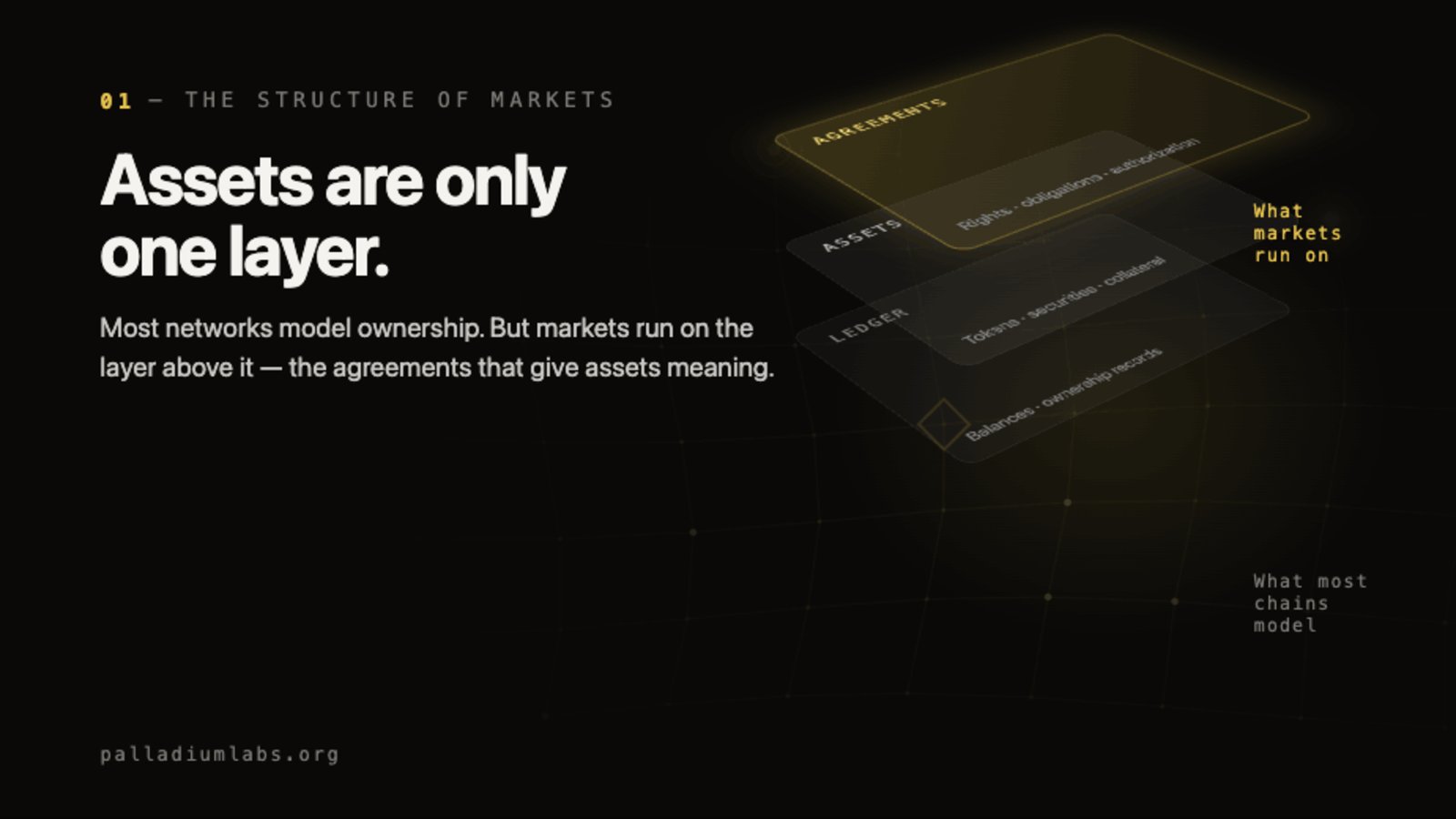
Who owns it?
Who transferred it?
What balance does an account hold?
This model works exceptionally well for representing ownership.
But ownership alone does not capture how financial markets operate.
A treasury bond is not merely an asset.
It represents obligations.
A loan is not merely an asset.
It represents a contractual relationship.
A repo transaction is not merely an asset transfer.
It is an agreement involving collateral, settlement conditions, and future obligations.
Financial markets are ultimately composed of agreements between participants.
Assets are only one part of the picture.
The Limits of Asset-Centric Systems
As financial applications become more sophisticated, developers increasingly encounter challenges that extend beyond asset ownership.
Questions emerge such as:
- Who is authorized to perform specific actions?
- What conditions must be satisfied before settlement occurs?
- Which parties are allowed to see particular information?
- How do multiple organizations coordinate around shared business logic?
These problems are fundamentally different from transferring tokens.
They are coordination problems.
Agreement problems.
Workflow problems.
Traditional financial systems have spent decades solving these challenges through legal contracts, operational processes, and institutional infrastructure.
Digital finance must solve them as well.
The Agreement-Centric Model
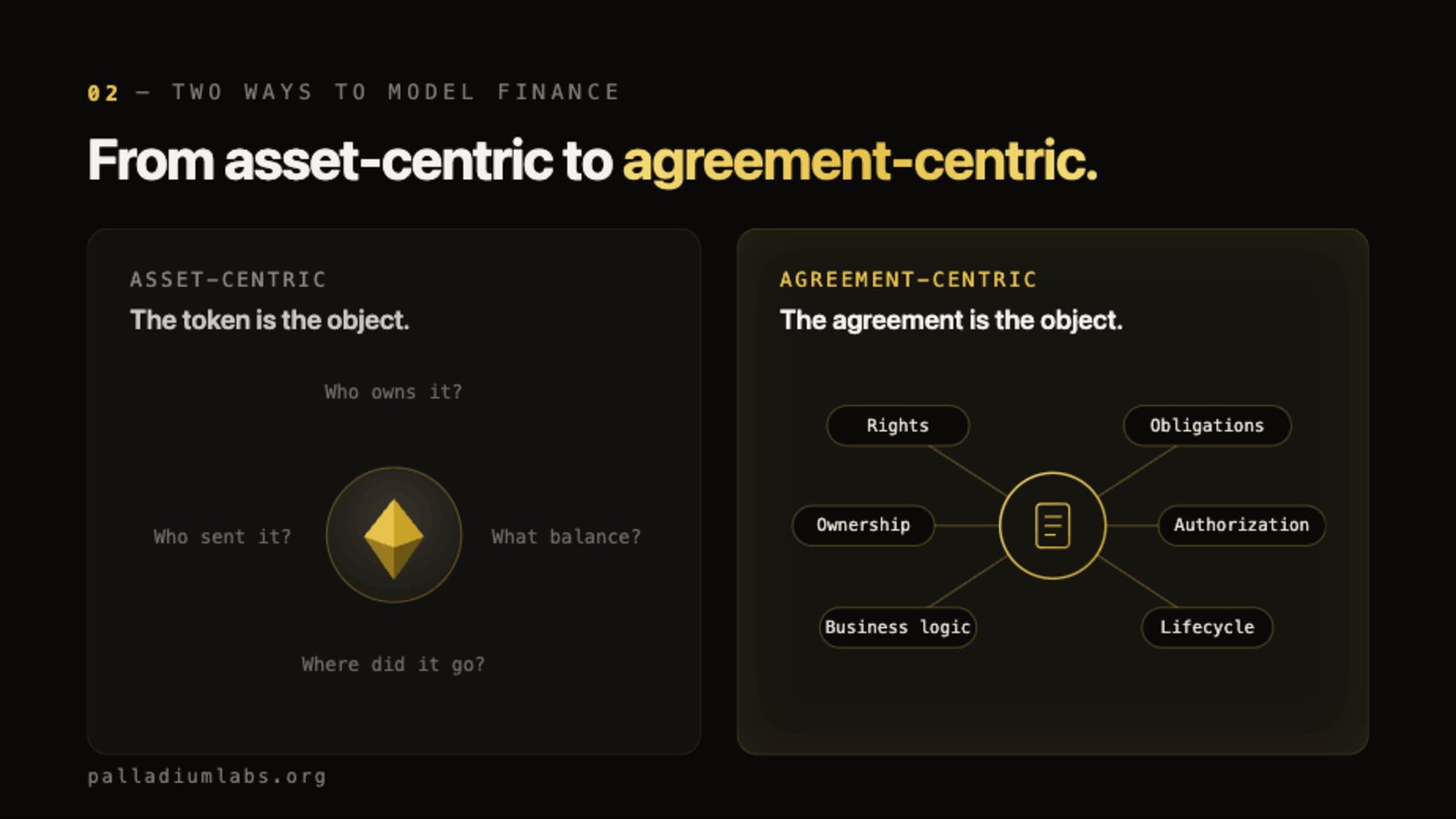
Daml approaches the problem from a different starting point.
Instead of beginning with assets, Daml begins with agreements.
A Daml contract defines:
- Rights
- Obligations
- Ownership
- Authorization
- Business Logic
- Lifecycle Events
The agreement itself becomes the primary object.
Assets remain important.
But they exist within a framework of explicitly defined relationships between participants.
This mirrors how financial institutions naturally think about markets.
Not as balances.
But as agreements.
Why Privacy Matters
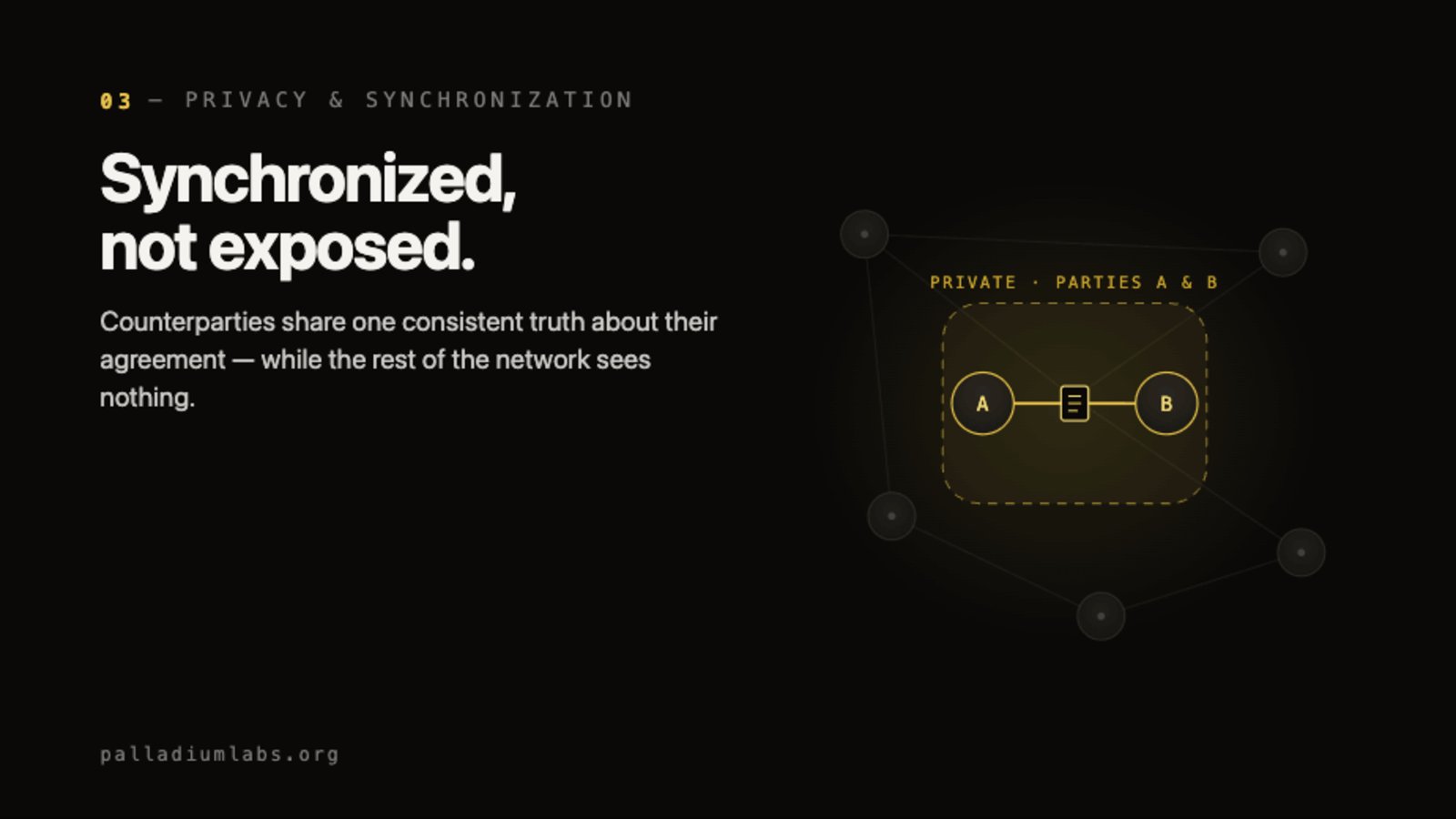
Another reality of financial markets is that participants rarely want all information to be public.
Banks do not expose every transaction.
Funds do not publish every position.
Institutions do not disclose every agreement.
Privacy is not an edge case.
It is a requirement.
As digital financial infrastructure evolves, systems must provide both coordination and confidentiality.
This becomes increasingly important as tokenized securities, private credit, and institutional financial products move on-chain.
Canton and Synchronization
If Daml provides the language for agreements, Canton provides the infrastructure for coordinating them.
One of the most important challenges in financial systems is synchronization.
Multiple organizations need to agree on the same outcome.
Not everyone needs to see everything.
But everyone involved must share a consistent understanding of the agreement.
Canton addresses this challenge through a model that allows applications to remain private while still participating in a synchronized network.
This enables coordination without requiring universal transparency.
For financial markets, that distinction is significant.
What This Means for Builders
For builders entering Canton, the opportunity may not be where most people initially look.
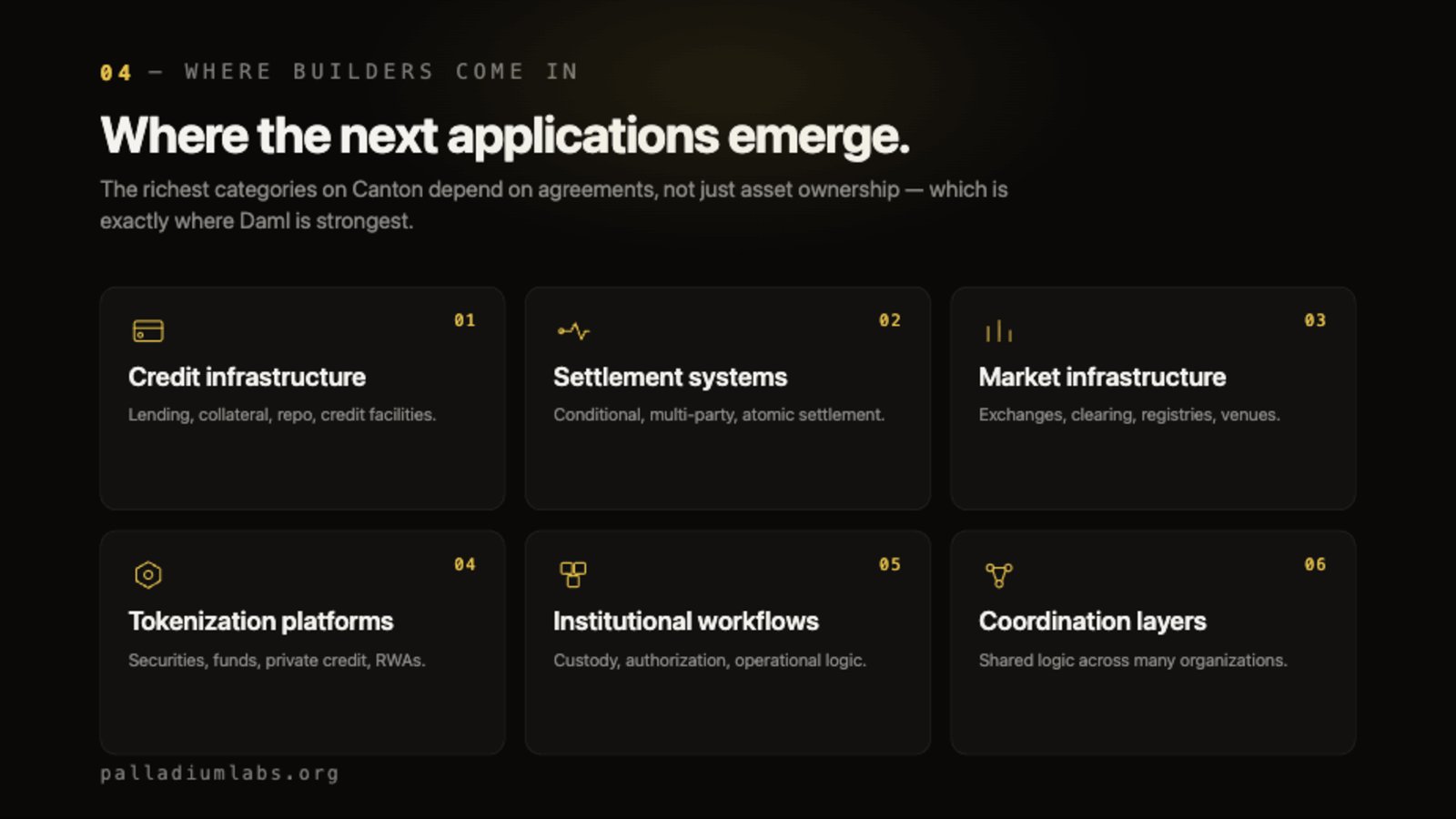
The next generation of applications may emerge around:
- Credit Infrastructure
- Settlement Systems
- Market Infrastructure
- Tokenization Platforms
- Institutional Workflows
- Financial Coordination Layers
These categories depend heavily on agreements rather than simple asset ownership.
As a result, they align naturally with the strengths of Daml and Canton.
Looking Ahead
The blockchain industry has become extremely effective at digitizing assets.
The next challenge is digitizing agreements.
We believe this transition will define the next era of financial infrastructure.
Not because assets become less important.
But because agreements determine how assets interact inside real financial markets.
For builders, researchers, and institutions exploring the future of finance, this distinction is worth paying attention to.
The future of finance may not be built around assets alone.
It may be built around agreements.
About Palladium Labs
Palladium Labs is a Daml-native research and engineering firm focused on programmable financial infrastructure.
We conduct research, build financial systems, incubate protocols, and support the next generation of applications being developed on Daml and Canton.
Website: palladiumlabs.org
LinkedIn: linkedin.com/company/palladiumlabs