
Cancore
Trust-minimized atomic settlement between Canton and public chains.
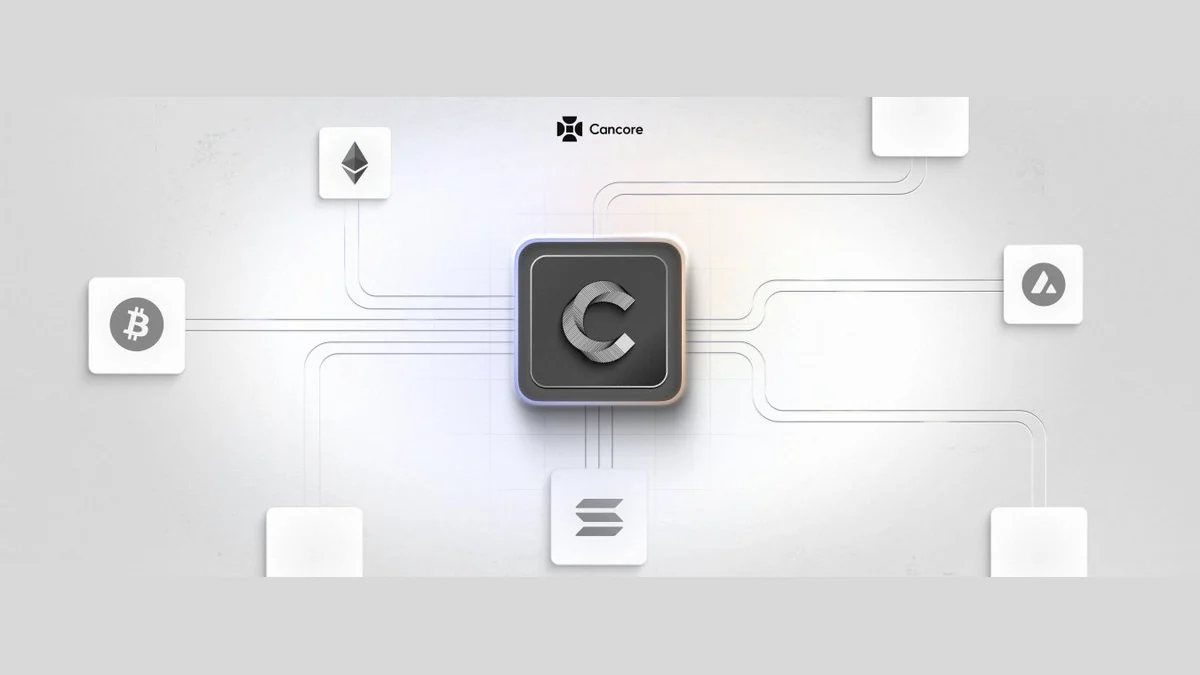
Cancore is cross-domain settlement infrastructure connecting Canton and public blockchain liquidity through atomic swap mechanics that avoid custody layers, relays, middlemen, and unnecessary validator assumptions.
Background
Cancore addresses one of the biggest strategic questions for Canton: how private institutional workflows connect to public-chain liquidity without relying on fragile bridge assumptions. Public chains have liquidity and users. Canton has privacy and settlement discipline. The market needs a safer path between them.
The project focuses on atomic settlement rather than custody. That distinction matters. Cancore is not trying to become a trusted middleman; it is trying to let value move across domains with fewer added trust assumptions.
Key Benefits
Cancore's value is in connecting ecosystems while keeping the trust model as lean as possible.
- Atomic cross-domain settlement between Canton and public blockchains
- No custody layer, relay dependency, or bridge-style middleman in the core pitch
- Liquidity access for assets and workflows that start inside Canton
- Mainnet-oriented infrastructure rather than a purely conceptual bridge
- Community participation through early access, whitelist waves, and Genesis-style programs
Why Canton
Canton is built for workflows where privacy, permissioning, and settlement certainty matter. But even the best private network benefits from credible access to broader liquidity. Cancore extends Canton's reach without asking institutions to abandon the properties that made them choose Canton in the first place.
That makes the Canton fit very clear: Cancore is a liquidity bridge for a privacy-first financial network, but with a trust-minimized design philosophy rather than the usual bridge shortcut.
What Makes It Unique
Cancore's uniqueness is the focus on atomicity and minimal trust. Many interoperability products ask users to trust validators, relayers, custodians, wrapped assets, or opaque infrastructure. Cancore's messaging is built around reducing those dependencies.
If it succeeds, it can become a practical settlement path between institution-friendly Canton activity and the open liquidity of public chains.
What's Included
Interoperability Model
Cancore centers on atomic swaps, cross-domain settlement, and the difference between liquidity access and custody-based bridging.
User Role
Early participants care about Genesis access, whitelist waves, testing, routing activity, and liquidity paths as the system expands.
Risk and Considerations
Interoperability infrastructure must be judged carefully. Users should consider audits, supported routes, finality assumptions, liquidity depth, and the exact transaction flow before using large amounts.
Behind the Scenes
Cancore appears to be building in public with a community-heavy rollout. Early access, whitelist activity, bug reports, and audit milestones all point to a project testing both technology and distribution at the same time.
Impact
Interoperability can make Canton more useful. If Cancore provides a reliable path to public-chain liquidity, Canton-native assets and workflows become easier to fund, exit, route, and integrate with the wider crypto economy.
Active Campaigns & Incentives
Cancore Genesis is the strongest current participation frame: limited access, community onboarding, and early-user involvement as the project moves deeper into mainnet usage.
Looking Ahead
The next phase is broader route coverage, deeper liquidity, more hardened settlement flows, and continued refinement based on early mainnet users and security review.
Over time, Cancore's most important work will be making cross-domain settlement feel routine: more supported assets, clearer routing, stronger monitoring, and a user experience that hides complexity without hiding risk.
From the Insights Hub

CantonNews Project Spotlight: Cancore
Cancore is a settlement layer built on Canton Network, meaning it’s responsible for finalising transactions between Canton and public blockchains like Ethereum.

$350B Settles Daily on Canton. None of It Reaches Public Chains. Yet.
Right now, two financial systems are running in parallel. They don't talk to each other... Institutional finance is tokenizing at scale. Public chains have deep, permissionless liquidity. But
The Final Piece for Institutional Web3: Canton Network
"Web3 will reinvent finance." That was the pitch sold to us for years. And for years, institutions basically watched from the sidelines. Not because they weren't interested. The infrastructure just