
"Web3 will reinvent finance."
That was the pitch sold to us for years. And for years, institutions basically watched from the sidelines.
Not because they weren’t interested.
The infrastructure just wasn’t built for them.
@CantonNetwork is what changes the equation.
The Institutional Gap Nobody Really Solved
Traditional blockchains were built with a specific crowd in mind.
Permissionless access, retail-first experimentation, and open composability at any cost. Great for DeFi degens. Not so great for a bank managing billions in assets...
Institutions need fundamentally different things.
Privacy by default. Permissioned access. Compliance baked in. Interoperability that doesn’t leak data everywhere. And honestly? Traditional L1's or L2's have not fully cracked that combination.
As @The_DTCC has stated:
“Privacy and confidentiality are non-negotiable requirements for regulated market participants considering distributed ledger technology.”
Why Institutions Never Fully Committed to On-Chain
Here’s the thing most people miss.
Institutions don’t just care about throughput and TPS. What they’re actually asking is:
- Who sees our data?
- Who controls access?
- How does this fit within the regulatory frameworks we already operate under?
- Can we plug this into existing infrastructure without ripping everything apart?
Traditional chains forced a compromise on at least one of those. Usually more than one.
So most institutions waited. Not because blockchain didn’t work, but because it didn’t fit. There’s a huge difference.
Enter Canton Network.
@CantonNetwork isn’t trying to be another general-purpose chain.
It’s a network of networks, purpose-built for institutional workflows.
This sounds like marketing speak until you look at what that actually means in practice 👇
- Configurable privacy instead of everything being transparent by default
- Permissioned domains that can still talk to each other
- Shared liquidity and logic without shared data
- Compliance as a native feature, not something bolted on after the fact
This is the first time Web3 infrastructure genuinely lines up with how institutions actually work day to day.
@YuvalRooz, CEO of @digitalasset, put it well:
“For the first time, financial institutions can realize the full benefits of a global blockchain network while operating within the regulatory guardrails that ensure a safe, sound, and fair financial system.”
Why This Feels Like the Final Piece
With Canton in the picture, a lot of things that were “technically possible” become operationally viable.
Tokenization actually works at scale.
On-chain settlement hits institution-grade reliability.
Interoperability stops meaning “everyone sees everything.”
Infrastructure has finally matured to the point where real capital can move on-chain with confidence, then jump from proof of concept to product deployment.
What Comes Next
Institutional Web3 isn’t going to arrive through memes and narratives. (Sorry.)
It arrives when blockchain becomes invisible infrastructure that just works.
Canton makes that possible.
But institutional systems don’t exist in a vacuum. They still need access to liquidity and public markets without compromising privacy.
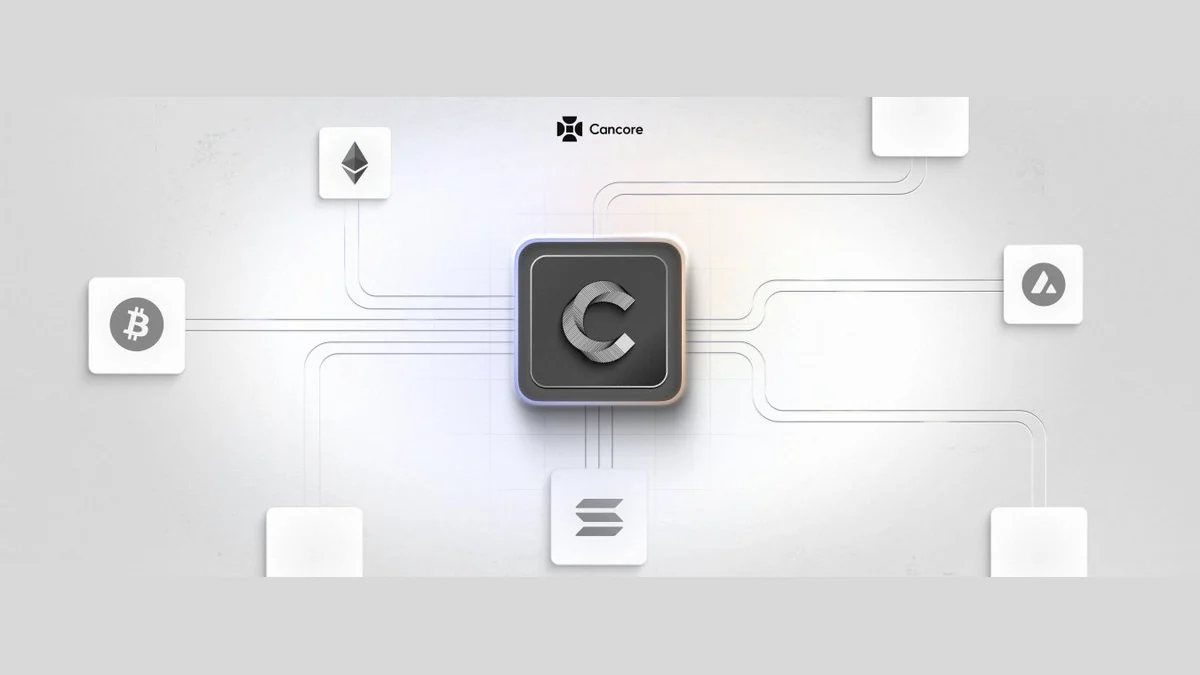
That’s where Cancore comes in, a settlement layer bridging private Canton workflows with public blockchain liquidity through trust-minimized, atomic settlement.
@CantonNetwork builds the foundation. Cancore makes it usable at scale.