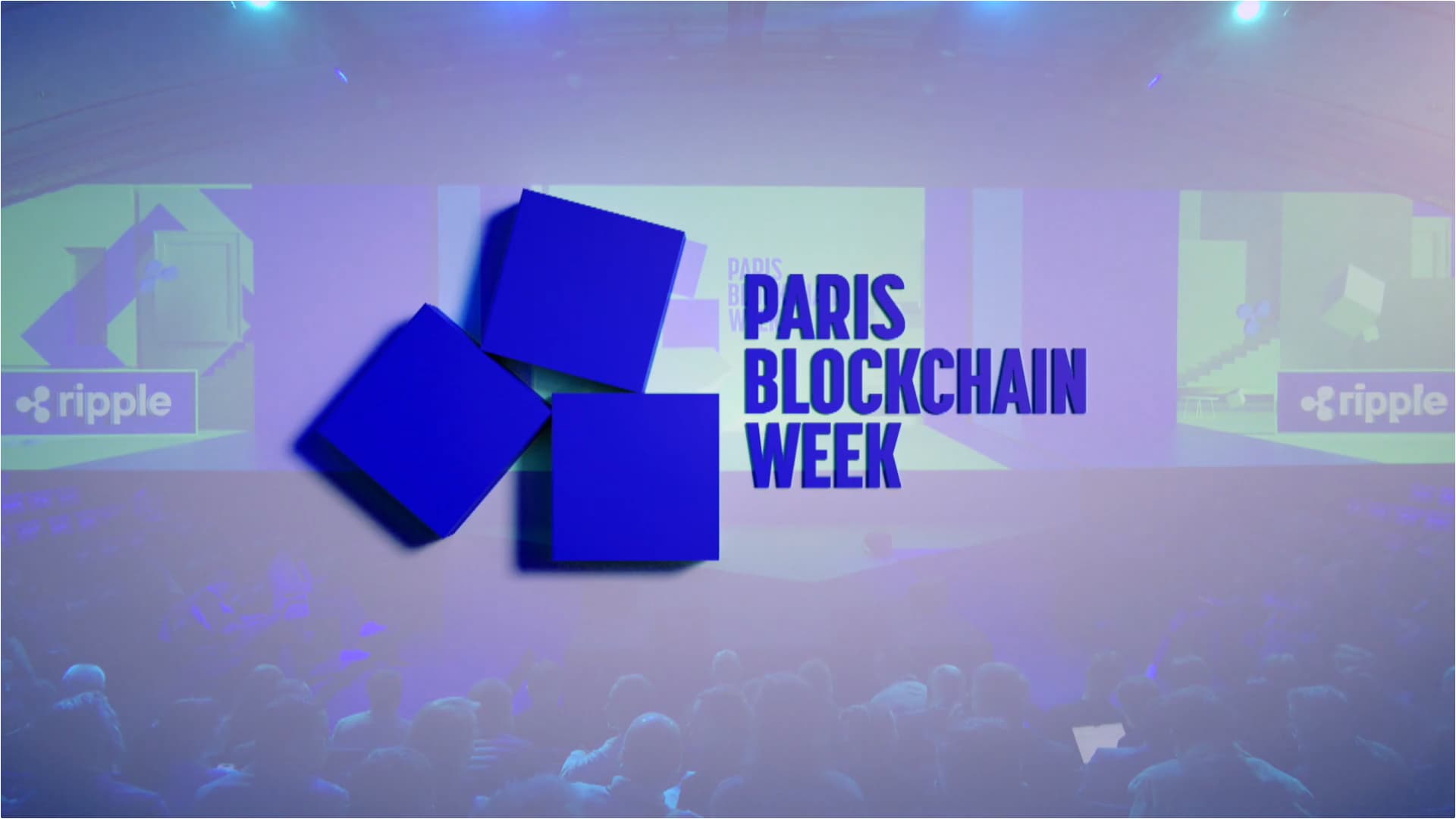

Paris Blockchain Week 2026 opened at the Carrousel du Louvre on April 15 under the banner "Where Institutions and Digital Assets Finally Meet" — and the conversations happening in its corridors are living up to that framing. With more than 10,000 decision-makers from banks, asset managers, regulators, and Web3 infrastructure teams in attendance, the conference's 7th edition is framed as a post-speculation moment: sessions on tokenized treasuries, regulated stablecoins, and cross-border settlement rails are being discussed as extensions of existing market structure, not alternatives to it.
Privacy and Composability: The Institutional Bottleneck
The clearest signal from day one came not from the main stage but from the side rooms. In a recap post after the first day, investor and commentator Tokenoya wrote that institutions are now "converging on one thing: privacy + composability is the real bottleneck" — and named Canton Network alongside custody platform dfnsHQ as emblematic of that shift.
The framing aligns precisely with Canton's own architecture. As a "network of networks," Canton enables financial institutions to run applications with institutional-grade privacy while still enabling atomic settlement between, for example, a tokenized private equity fund and a digital currency — without exposing either party's full books. In a room full of banks and asset managers weighing blockchain adoption, that combination is not a niche feature. It is the core requirement.
Tokenized Gold, JPMorgan, and the RWA Momentum
One of the most notable details emerging from day one is a reported meeting with a gold tokenization project backed by JPMorgan — a reminder that real-world asset pilots are no longer confined to crypto-native players. Paris Blockchain Week's program leans heavily on tokenization at scale, with speakers pointing to tokenized commodities and collateral as the next major wave once legal and custody frameworks are finalized.
For Canton, this momentum is directly relevant. The network already handles $350 billion in daily repo settlements using tokenized US Treasuries and Gilts, and its infrastructure has been validated for cross-border, multi-currency atomic settlement. As gold, private credit, and other real-world asset classes move toward on-chain representation, Canton's composability layer — allowing different tokenized assets to settle atomically across independent applications — positions it as the natural infrastructure for that next wave.
Europe's Institutional Blockchain Moment
French media have framed the 2026 edition as the moment "la finance traditionnelle bascule" — traditional finance tips over. Coverage highlights how tokenization and digital euros are forcing incumbents to rethink capital efficiency and risk controls rather than simply issuing press releases. Global Digital Finance, whose members include major banks and crypto firms, described this year's conference as one where the focus has shifted to how blockchain "is beginning to play inside large financial institutions" under MiCA and other regulatory regimes.
Canton is already operating in that environment. With Euroclear, DTCC, LSEG, and Societe Generale among its working group participants, and its privacy-first architecture purpose-built for MiCA-aligned compliance, Canton is not preparing for Europe's institutional blockchain moment — it is already part of it.