
Key Insights
- Canton is a public network for interoperable privacy-preserving smart contract applications, designed to support confidential multi-party financial workflows without relying on a single globally replicated state.
- Canton’s core differentiator is configurable privacy with composability, meaning each participant sees only the part of a transaction it is entitled to access, while applications can still interact atomically.
- The network has attracted institutional adoption, including production and announced deployments from Broadridge, DTCC, and J.P. Morgan across repo, collateral, tokenized Treasuries, tokenized bank deposits, and payments infrastructure.
- Canton has already delivered meaningful value through privacy-preserving deployments, used at scale by institutions. Now, its 2024-launched public mainnet serves as the foundation for over 150 live or emerging applications, creating the activity base that underpins Canton Coin’s utility and economic relevance.
- Governance is exercised by more than 50 Super Validators under a two-thirds supermajority threshold. The Super Validator set spans traditional finance, crypto-native infrastructure, and ecosystem operators, with open membership and governance coordinated by the Canton Foundation.
Introduction
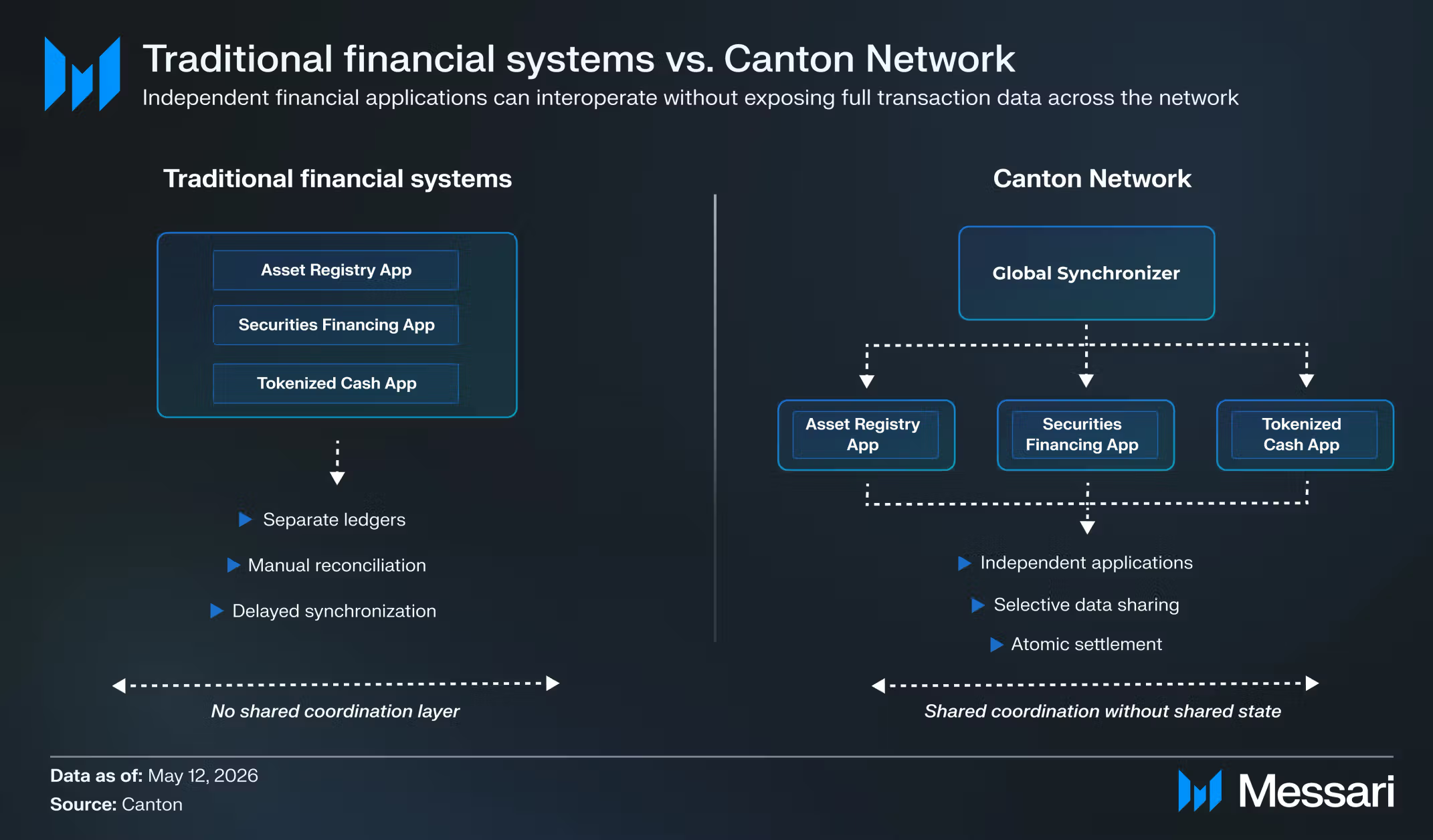
Traditional financial infrastructure remains constrained by fragmentation, reconciliation latency, and the difficulty of moving value atomically across multiple parties and systems. Financial transactions often span custodians, brokers, exchanges, clearinghouses, and other intermediaries, each maintaining separate records and operational processes. Because these systems are not synchronized in real time, firms rely on reconciliation, manual checks, and batch settlement to confirm ownership and finalize transactions. The result is slower settlement cycles, higher operational risk, and greater complexity, especially in workflows that require coordinated delivery, payment, collateral movement, or asset transfer across institutional boundaries.
Blockchains have long promised to address these inefficiencies by providing shared settlement infrastructure and programmable value transfer. However, most blockchains introduce constraints that limit their suitability for institutional financial markets. They typically rely on a single globally replicated state, where transaction details are visible to network participants beyond the parties directly involved. For regulated financial institutions, where confidentiality, selective disclosure, governance control, permissioning, and transaction finality are core requirements, this level of transparency and limited operational control can be incompatible with existing business, legal, and compliance obligations. Alternatively, private blockchain environments attempt to preserve confidentiality and control, but often reintroduce the same siloed execution and limited interoperability that shared infrastructure is meant to solve.
Canton is designed to resolve this tradeoff: financial infrastructure requires synchronized ledgers, institutional-grade privacy, and composability across applications. Canton enables independent applications to operate over shared infrastructure without forcing all activity into a single globally replicated state. Instead, Canton allows applications to define their own privacy, permissioning, and governance models while sharing only the information required to complete a transaction. The Global Synchronizer provides a shared coordination layer that orders transactions, keeps participants in sync, and prevents conflicts, while transaction logic and data validation remain with the parties directly involved.
This architecture has demonstrated early product-market fit in one of the most important segments of financial infrastructure: collateral mobility and synchronized institutional settlement. Tokenized Treasuries, money market funds, bank deposits, and stablecoins are beginning to converge on Canton-based workflows, alongside the infrastructure needed to support them. Unlike networks that expanded from retail crypto activity toward institutional use cases, Canton’s adoption has been driven from the outset by regulated financial institutions, with the public network emerging as a coordination layer for these processes.
Background
Canton Network was originally developed by Digital Asset, a blockchain infrastructure company founded in 2014 by Yuval Rooz, Eric Saraniecki, and Shaul Kfir. The platform was designed for regulated financial environments, with an emphasis on configurable privacy, interoperability, and multi-party processes. In its early stages, Canton and its open-source smart contract language, Daml, were deployed across private, permissioned environments used by institutional participants, including BNP Paribas, Goldman Sachs, and HSBC. Daml and the underlying Canton protocol were introduced in a February 2020 whitepaper. This outlined the foundation for Canton’s architecture and its approach to interoperable, privacy-preserving multi-party applications.
In January 2024, Digital Asset published an updated Canton Network whitepaper that expanded this vision into a public, interoperable network architecture. Rather than forcing all activity into a single chain, Canton is structured as a network of independent applications that can interoperate atomically through shared synchronization infrastructure while retaining control over their own privacy, permissioning, and governance models. This architecture is implemented through synchronizers, which coordinate transaction ordering and communication across participants, maintaining global consistency. The first decentrally-operated public synchronizer, the Global Synchronizer, is operated by independent Super Validators, while governance is facilitated by the Canton Foundation. The Global Synchronizer testnet launched in July 2023, followed by mainnet in July 2024. Alongside this rollout, Canton Coin (CC) was introduced as the native token used for payments, incentives, and public network coordination.
Institutional adoption accelerated in 2025 and 2026 as Canton moved from private deployments toward broader shared-network activity across collateral, tokenization, and payments. In August 2025, Digital Asset and an industry working group completed one of the industry’s first real-time, fully onchain U.S. Treasury financing against USDC, followed by further live trades using additional stablecoins and tokenized bank deposits, demonstrating real-time collateral reuse and cross-border transactions. In November 2025, Franklin Templeton expanded its Benji Technology Platform onto the network, while in December 2025, DTCC announced a partnership with Digital Asset to tokenize DTC-custodied U.S. Treasury securities on Canton. Momentum continued in 2026, with Kinexys by J.P. Morgan announcing plans to integrate JPM Coin (JPMD), HSBC piloting tokenized deposits, Visa joining as a Super Validator, and HQLAX announcing strategic investments from Broadridge and Digital Asset to support its planned migration to Canton. Canton’s recent traction also extends beyond traditional financial institutions, with crypto-native infrastructure providers including Circle, Fireblocks, Mesh, BitGo, and zerohash supporting stablecoin, custody, settlement, payment, and validator infrastructure across the network.
Digital Asset has raised over $400 million in total funding to support Canton’s development and ecosystem growth. Recent funding includes a reported strategic partnership with a16z crypto, building on a $135 million Series E round in June 2025 led by DRW Venture Capital and Tradeweb, which was followed by a $50 million strategic round in December 2025 from BNY Mellon, iCapital, Nasdaq Ventures, and S&P Global.
Technology
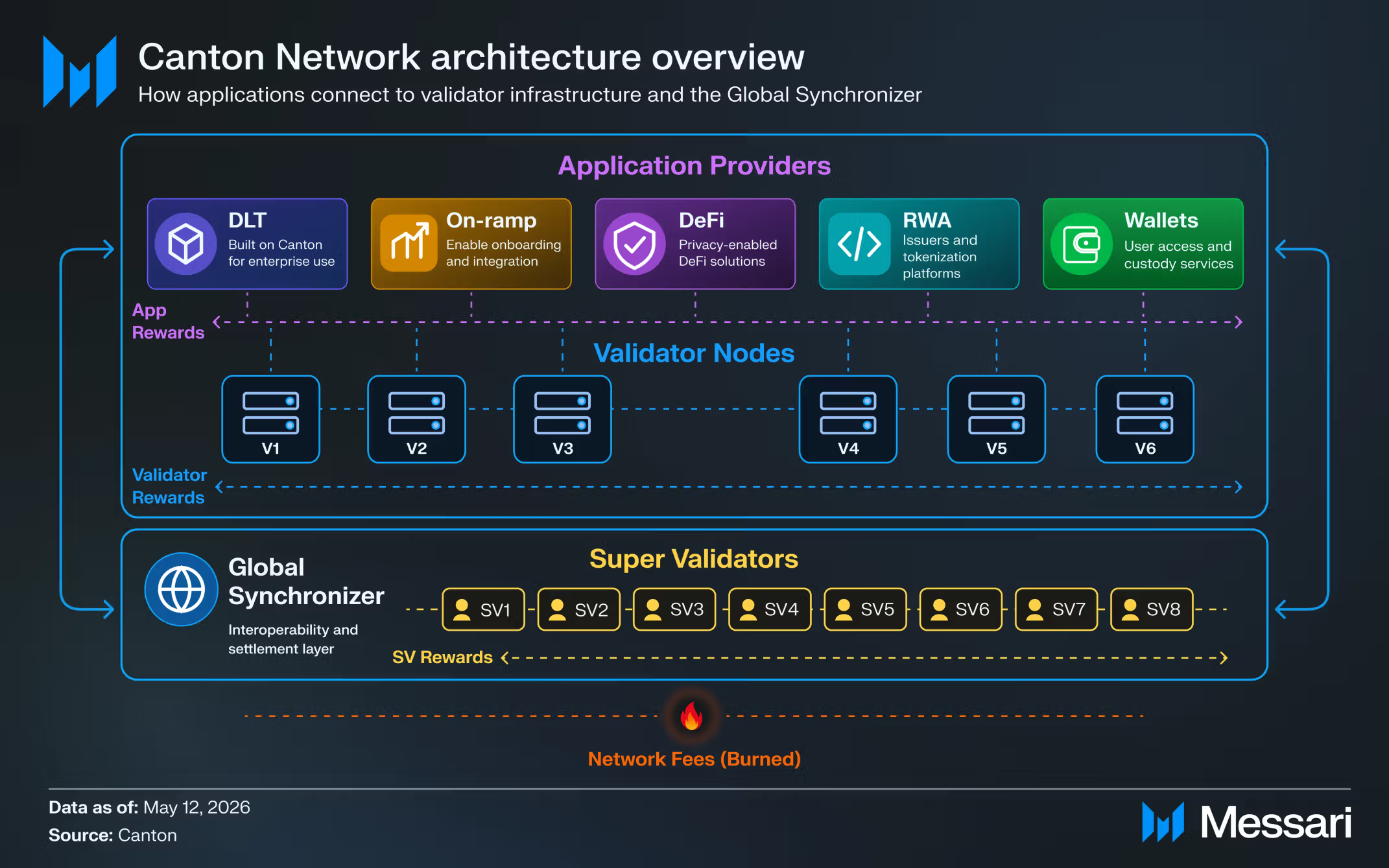
Canton is designed so that participants do not replicate a single global ledger in full. Instead, the state is partitioned according to privacy rules, and each validator node stores only the portion of the virtual ledger relevant to the parties it hosts. This architecture enables sub-transaction privacy, horizontal scalability, and cross-application composability without relying on bridges or Layer-2 architectures.
At a high level, Canton consists of four core components: (i) validators and parties, (ii) synchronizers, (iii) the Daml smart contract language and state model, and (iv) a stakeholder-based transaction protocol for validation and ordering.
Validators and Parties
Validator nodes are the primary interface between participating organizations and the network. Each organization or individual, represented by Daml as a “Party”, is hosted on one or more validator nodes that act on its behalf. Validator nodes only store the contracts and transaction history relevant to the parties they host, so no single node holds the full network state. Validator nodes submit transactions, only validate the sub-transactions they are entitled to see, and maintain a local ledger that remains consistent with the global virtual ledger. Users can either operate their own validator nodes or have their node run as a service by third parties. Canton also includes a permissions manager that allows users to grant limited application-level access without relinquishing control over their data or assets, supporting organization-specific compliance and access control requirements.
Synchronizers
To transact with one another through applications on Canton, validator nodes connect via one or more synchronizers. Synchronizers provide the communication and coordination layer for the network, ensuring atomic transactions and global consistency across participants and independently governed applications. They route messages between connected nodes, establish transaction ordering, and confirm transaction commits. In Canton’s architecture, a synchronizer consists of a sequencer and a mediator.
Transaction data is encrypted end-to-end and delivered only to the relevant participants for validation, so synchronizer operators do not have access to transaction contents. Synchronizers can be operated centrally by a single service provider or in a decentralized form by independent operators using Byzantine Fault Tolerant (BFT) consensus. Canton’s public shared synchronizer is the Global Synchronizer, which is operated by independent Super Validators, with governance facilitated by the Canton Foundation.
Synchronizers are not isolated silos. Validator nodes can use multiple synchronizers and select them per transaction. This allows applications to compose workflows across synchronizers, maintaining atomic transaction guarantees and Canton’s privacy properties, without requiring external bridge infrastructure.
Daml Smart Contract Language and State Model
Daml is Canton’s open-source smart contract language, designed for multi-party processes in regulated environments. It provides primitives for modeling onchain assets, their lifecycles, and associated multi-party workflows, with configurable privacy and control. It also enables developers to represent real-world rights and obligations directly within smart contracts. Rather than leaving authorization and visibility to be implemented manually at the application layer, Daml embeds both directly into the contract model. Developers define business logic through contract templates, which specify (i) the data a contract stores, (ii) the actions that can be taken on it, (iii) the parties that must authorize its creation, (iv) the parties that can view it, and (v) any conditions that must hold. In Daml, signatories authorize contract creation and the consequences of choices exercised on that contract, while observers can view the contract without controlling it.
Canton’s state model is based on an Active Contract Set (ACS), which is conceptually similar to Bitcoin’s UTXO model in that contracts are created, remain active, and are later archived by subsequent transactions. Transactions can be composed into larger workflows, while each Validator node receives only the portion of the transaction tree it is entitled to see. This selective visibility enables sub-transaction privacy without preventing each participant from verifying that its local view is valid, properly authorized, and consistent with the shared ledger state.
Stakeholder-Based Validation and Ordering
Canton achieves distributed consistency through a two-phase transaction process that preserves privacy while ensuring that all properly functioning nodes maintain consistent views of a single virtual ledger.
First Layer: Stakeholder Validation and Mediation
Rather than broadcasting every transaction to all nodes, Canton only routes sub-views of confirmation requests to the relevant stakeholders. When a transaction is submitted, each stakeholder validates the sub-transaction it is entitled to see, checking authorization, confirming consistency with its local state, and verifying that the contracts being consumed have not already been used. Each stakeholder then returns a signed confirmation or rejection.
A mediator node within the synchronizer aggregates stakeholder confirmations and coordinates the commit decision. On the Global Synchronizer, mediation is implemented as a decentralized BFT service operated by Super Validators, rather than a centralized coordinator. This design reduces message complexity and preserves privacy by preventing participants from learning about unrelated portions of the transaction.
Second Layer: Sequencing
The sequencer establishes a consistent order of transactions across all participants connected to a synchronizer. This ensures that when multiple transactions attempt to update the same contracts or assets, they are processed in a deterministic sequence, preventing conflicting outcomes across different validator nodes.
In Canton’s architecture, all synchronizer messages pass through a sequencer, which orders them without accessing their contents. When the sequencing layer is decentralized, it can be implemented using BFT consensus, as in the case of the Global Synchronizer.
Putting It All Together
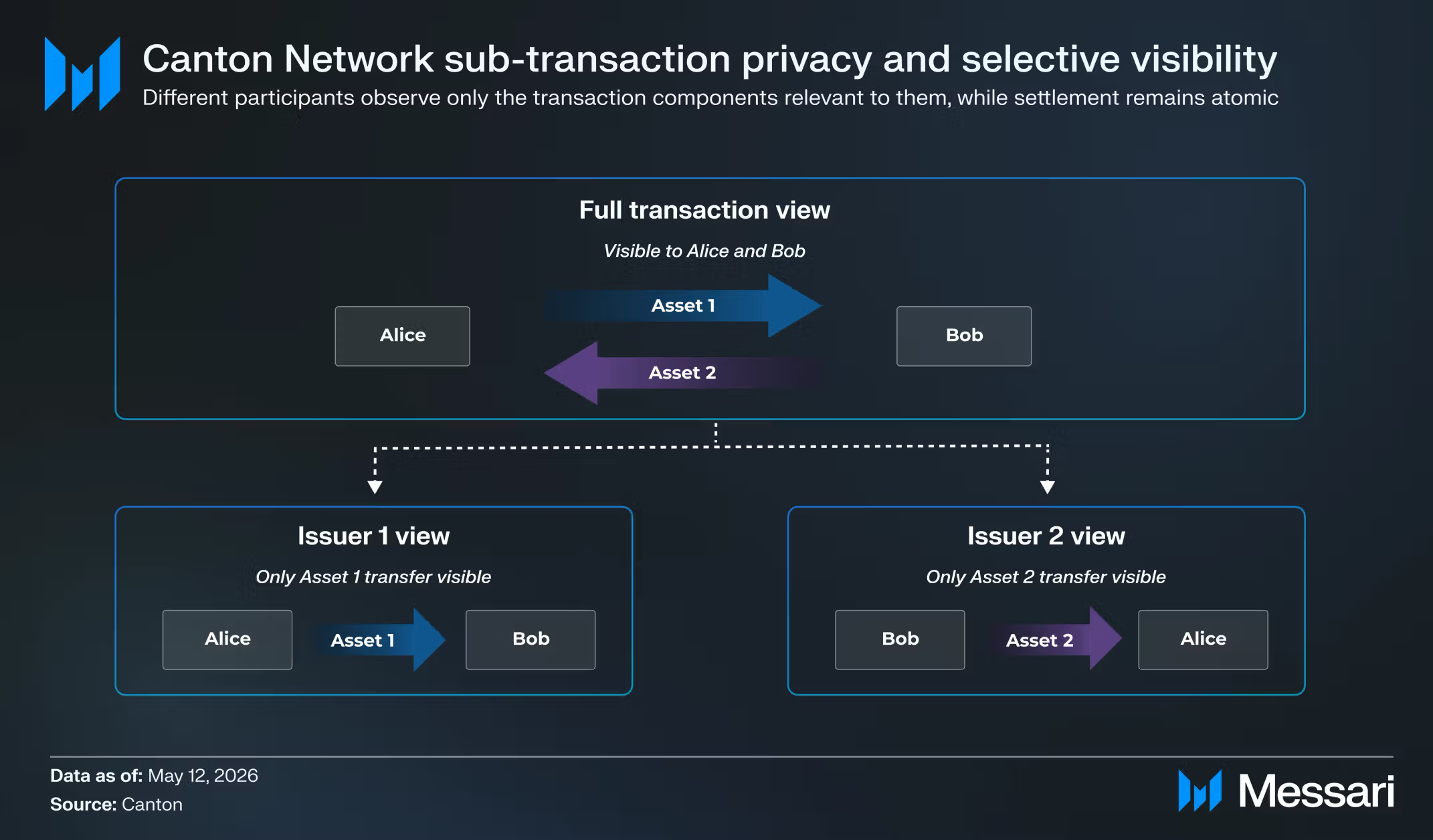
To illustrate how these components interact, consider an atomic asset swap between two parties, Alice and Bob, each of whom holds an asset issued by a different institution.
Before the transaction, three contracts are active on the ledger: an asset issued by Issuer 1 and owned by Alice, an asset issued by Issuer 2 and owned by Bob, and a SwapOffer contract representing Alice’s proposal.
- Submission: Bob accepts the SwapOffer, and his validator node submits the exercise as a command.
- Transaction Construction: The validator node interprets the Daml logic and constructs the full transaction tree, archiving the SwapOffer, transferring both assets, archiving the originals, and creating new contracts with swapped ownership.
- Blinding: The transaction tree is decomposed into stakeholder-specific views through blinding, so each participant sees only the portion relevant to it.
- Sequencing: These encrypted views are sent to the synchronizer’s sequencer, which orders the messages without accessing their contents.
- Distribution: The sequencer delivers each encrypted view only to the validator nodes entitled to receive it.
- Validation: Each participant validates their view. Alice and Bob see the full transaction, while Issuer 1 and Issuer 2 see only their respective transfer legs. Each participant checks authorization, contract state, and the absence of conflicting consumption.
- Mediation: The mediator aggregates signed confirmations from all stakeholders and determines whether the transaction can be committed.
- Commit: Once all required confirmations are collected, the result is published through the sequencer, and all validator nodes apply the state changes atomically.
The result is a single atomic settlement across two asset types, two issuers, and two counterparties, with each participant seeing only the information it is entitled to see. The operation of this shared infrastructure, and the incentives that support it, are coordinated through Canton’s native token, Canton Coin.
Canton Coin
Token Functions
Canton Coin (CC) serves three primary functions within the network: paying transaction fees on shared public infrastructure, incentivizing network participation, and supporting the operation of the Global Synchronizer.
Transaction Fees
Network fees are denominated in USD and settled in CC using an onchain conversion rate updated every 10 minutes, calculated as the median of price submissions from Super Validators (which leverage independent price oracle data from firms like Kaiko and Lukka). Coin contracts that fall below the holding fee are automatically burned.
Infrastructure Incentives
Unlike traditional proof-of-stake networks, Canton does not rely on a global validator set that orders and validates every transaction across the network. Instead, transaction validation is performed by the stakeholders involved, while the shared infrastructure coordinates ordering, consistency, and finality. CC is used to incentivize the operation of the shared public infrastructure, such as the Global Synchronizer.
Participation Incentives
Application providers, users, and infrastructure operators also receive CC rewards, differentiating Canton’s tokenomics from networks where emissions primarily accrue to validators, stakers, or early investors. This design aims to create a continuous incentive for application builders and users to bring activity to the public network, linking issuance more directly to utility, adoption, and ecosystem growth.
Tokenomics
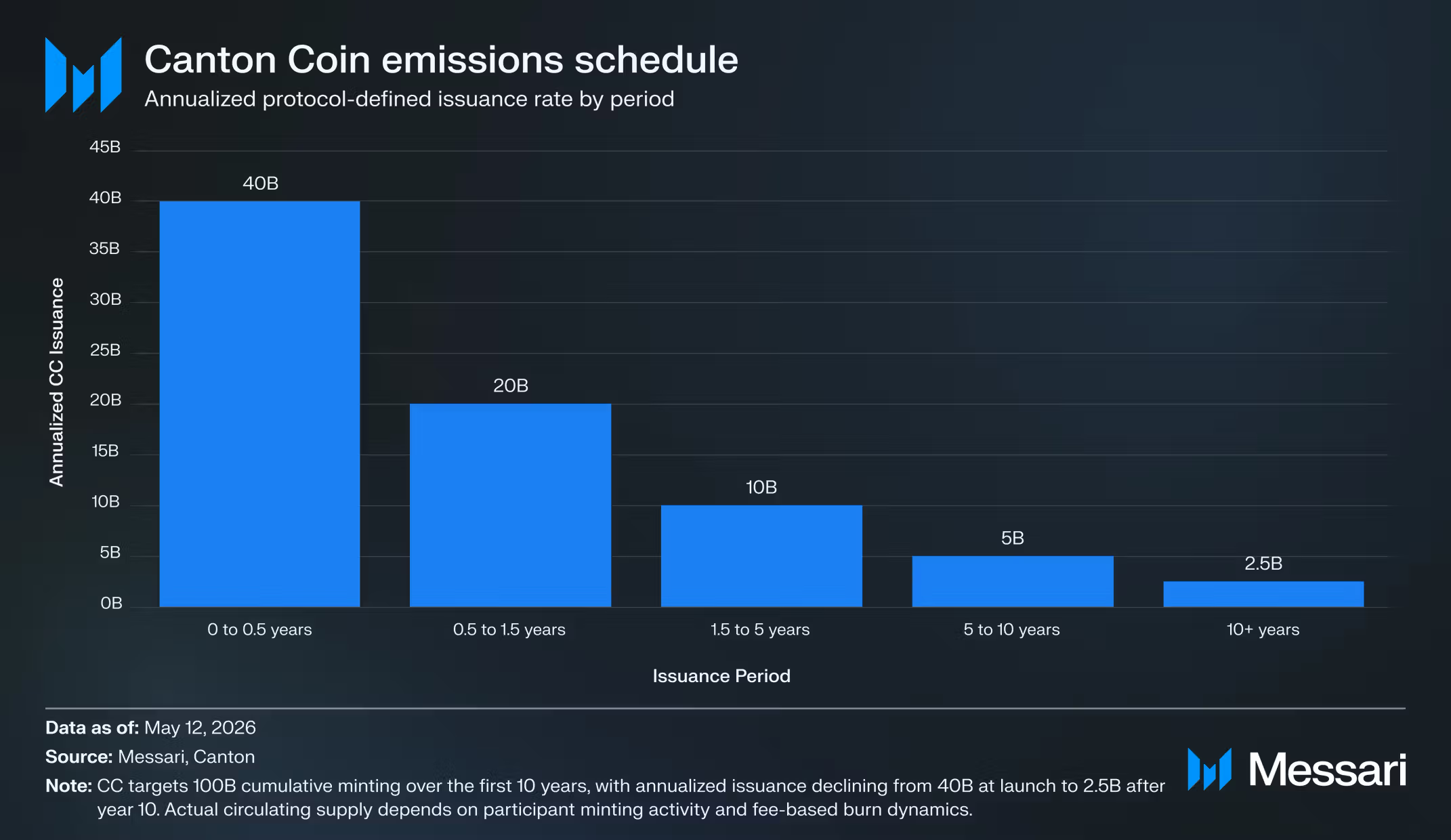
Canton Coin follows a distribution model with supply allocated to active network participants since mainnet genesis, and not via traditional premine or venture allocation. Ongoing supply is shaped by a combination of scheduled issuance and fee-based burns.
The emission schedule is defined as follows:
- Target State: Approximately 2.5 billion CC issued annually at steady state, offset by protocol-defined burn mechanisms.
- 10-Year Issuance: Up to 100 billion CC may be issued over the first 10 years from mainnet launch in July 2024. However, issuance does not imply circulating supply. CC enters circulation only when participants mint rewards based on eligible network activity, meaning total supply depends on realized usage and fee-based burns.
- Post-Year 10 Regime: Maximum annual mintable issuance declines to 2.5 billion CC under a reduced emission schedule.
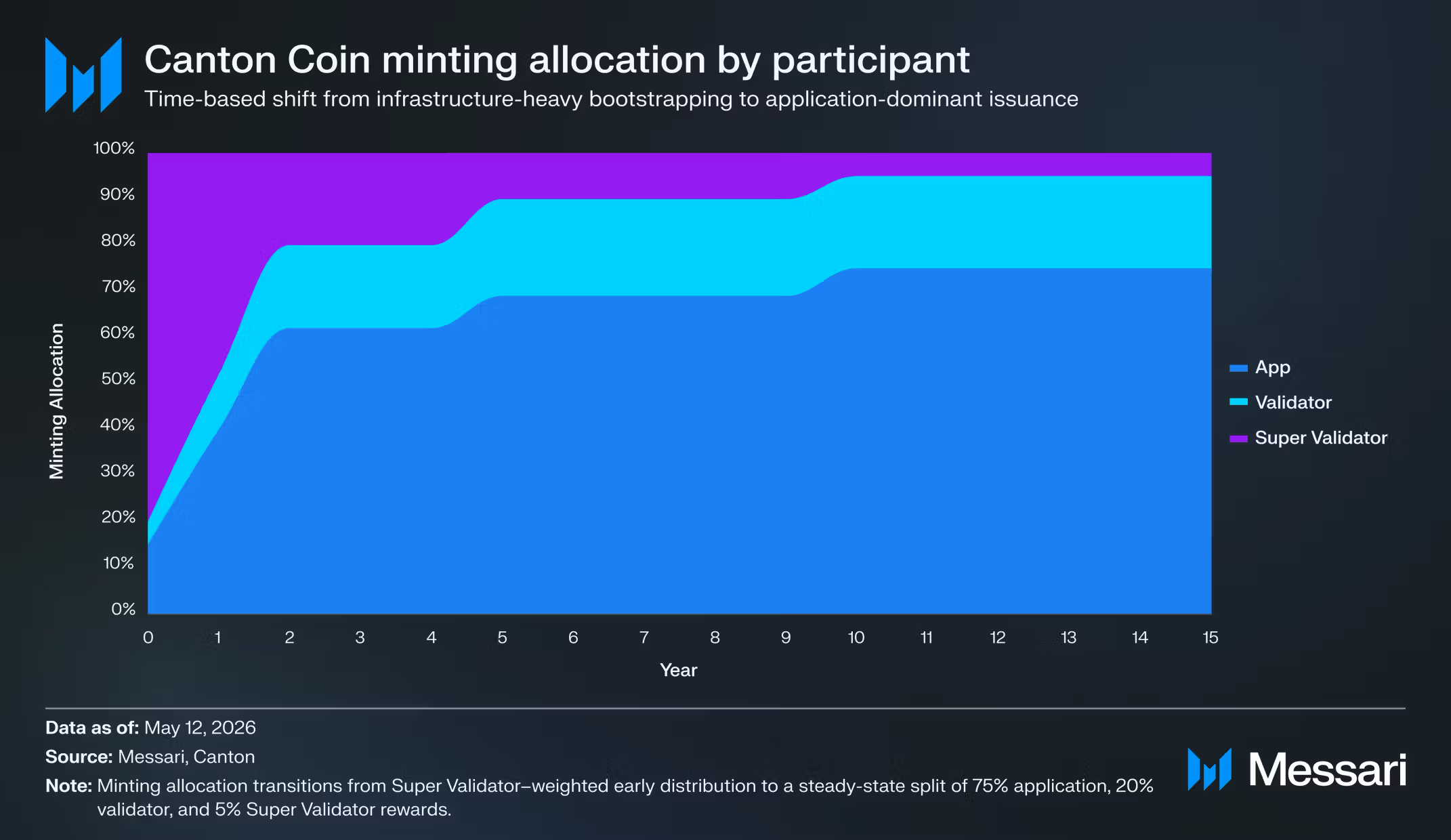
Over the initial 10-year period, CC reward distribution evolves across Super Validators, validators, users, and application providers, subject to governance and scheduled changes in mintable supply.
- Early infrastructure bootstrapping: Initial allocations favored Super Validators and infrastructure operators to support the launch and operation of the Global Synchronizer.
- Shift toward application utility: As the network has matured, scheduled halvings have reduced total mintable rewards while shifting a larger share toward application providers. Approximately 60% of current mintable rewards are currently allocated to featured applications and assets, with rewards tied to the transactional activity they generate.
- Long-term reward design: After year 10, the allocation is expected to shift toward approximately 75% for applications and 25% for infrastructure, reflecting a longer-term design in which more rewards flow to network usage and application activity.
- Protocol development funding: In addition, CIP-0100 allocates 5% of annual mintable emissions to a Protocol Development Fund supporting core protocol development, ecosystem tooling, and network initiatives. Fund distributions are milestone-based and subject to governance oversight, quarterly reporting, and annual audits.
This structure creates a continuous incentive for builders and issuers to bring utility to Canton, rather than concentrating emissions solely around infrastructure operators or early stakeholders.
Network Participants
These reward allocations map to distinct economic roles within Canton’s network, where different participants contribute to infrastructure, transaction execution, and application-level activity.
Super Validators
Super Validators operate the Global Synchronizer’s shared public infrastructure and participate in governance. Canton has more than 50 live Super Validators, including operators that run their own Super Validator nodes and participants that govern through multi-tenant arrangements with existing node operators. Early reward allocations favored Super Validators and other infrastructure operators to support the launch and decentralization of public-network operations. Over the first 10 years, Super Validators are eligible to mint a share of total emissions, along with transaction-fee-related rewards. To maintain full governance weight, Super Validators are required to lock 70% of their lifetime CC rewards, aligning governance participation with long-term economic exposure.
Validators
Validator nodes run Canton applications and participate in network activity, whether transactions are coordinated by the Global Synchronizer or other synchronizers across the network. The validator set is open, with over 780 active validators as of May 12, 2026. Validator nodes earn a share of transaction-fee-related rewards and may receive additional rewards subject to governance decisions. Validator participation expanded rapidly during 2025, reflecting early-stage network growth and incentive-driven participation.
Application Providers
Application providers build and operate services on Canton and receive the largest share of rewards over time. Each application’s mintable rewards are determined by its contribution to network activity and utility. Canton introduced CIP-0104, shifting application rewards toward traffic-based measurement. Under this model, rewards are increasingly tied to observed transaction flow, linking emissions even more directly to network usage. The change also illustrates Canton’s active governance process, with network participants adjusting reward design over time to improve the sustainability and utility alignment of CC emissions.
Burn-Mint Equilibrium
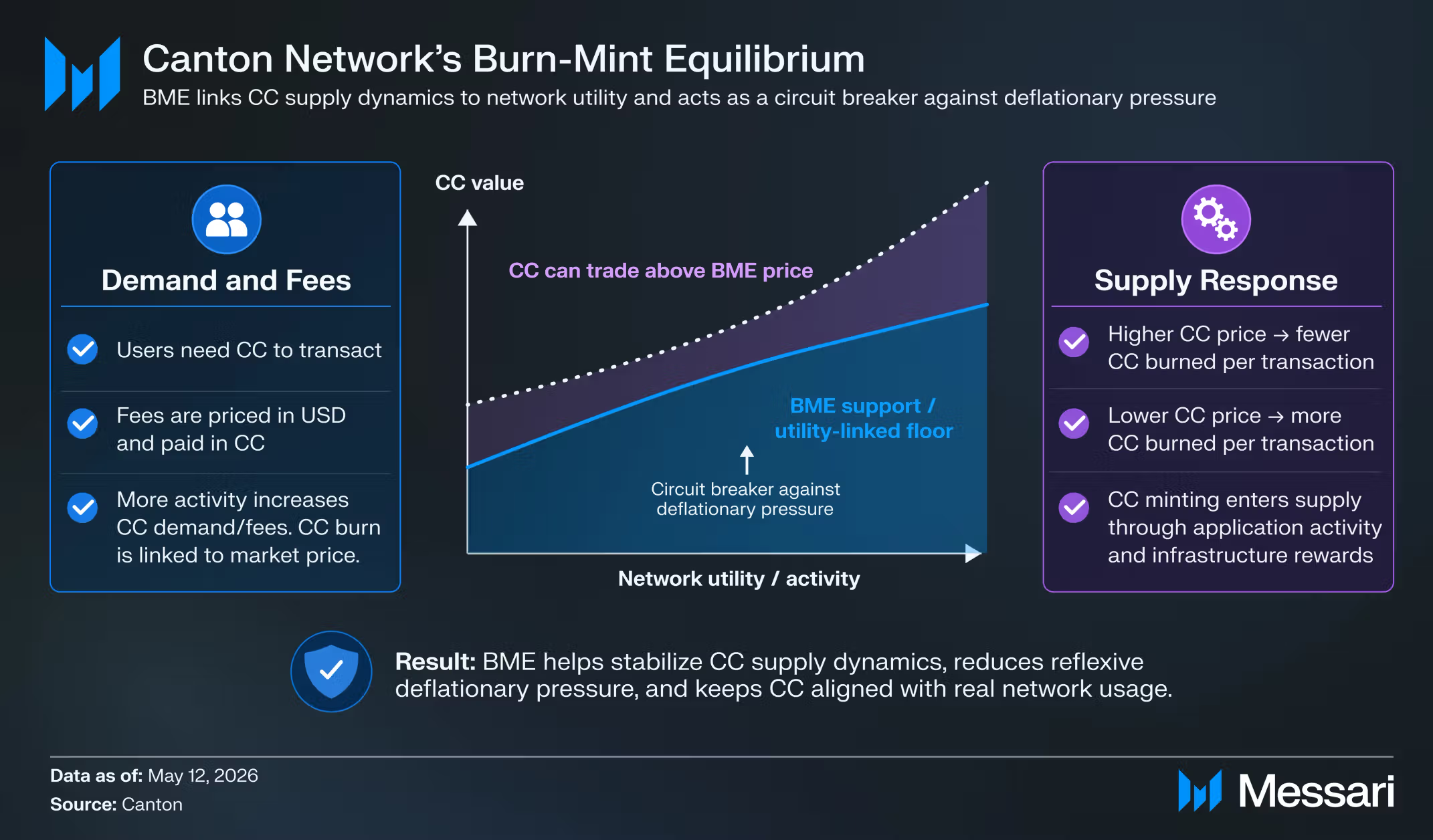
Canton’s token model is designed to balance issuance with fee-based burns over time, while aligning token value to network usage. Network fees are fixed in dollar terms and paid in CC, so the amount of CC burned depends on both transaction activity and the token's market price.
Net supply change is determined by CC minted minus CC burned. If CC trades at a higher price relative to dollar-denominated activity, fewer tokens are burned for a given level of fees. If CC trades at a lower price relative to activity, more tokens are burned for the same fee amount. This creates a market-linked feedback mechanism in which burn pressure adjusts with token price and network usage.
Unlike token models that rely heavily on persistent token deflation, Canton’s burn-mint equilibrium is designed to act more as a stabilizing mechanism tied to network utility. If burn temporarily exceeds mint and CC appreciates, the number of tokens burned per transaction declines automatically because fees remain fixed in dollar terms. This reduces the likelihood of reflexive supply contraction disconnected from underlying network activity.
The mint side is also constrained by scheduled reductions in maximum mintable supply. By year 10, maximum annual mintable issuance declines to 2.5 billion CC under a reduced emission schedule, though supply only enters circulation when participants mint rewards based on eligible network activity. Over time, Canton’s burn-mint equilibrium is intended to align CC supply dynamics closely to realized network utility rather than speculative token demand.
Canton’s current fee burn suggests that this model is already being reflected in public-network activity. Canton generated around $66.6 million in protocol fees in April 2026, one of the highest among major L1 networks, and its burn-to-mint ratio has risen materially since TGE. As more institutional workflows use the Global Synchronizer for cross-application composability, additional fee-generating activity could further strengthen the relationship between CC supply dynamics and network utility.
Governance
Governance plays a central role in shaping CC dynamics, with key parameters affecting supply and incentives managed through Canton’s onchain governance framework. Governance of the public infrastructure is published openly via the Canton Foundation. Anyone in the community can make proposals and suggest Canton Improvement Proposals (CIPs), which are voted on by Super Validators under a two-thirds supermajority threshold. Governance actions include setting fee parameters, adjustments to the minting curve, designating featured applications, and approving Super Validator membership. Approved decisions are executed onchain through the decentralized synchronizer operations party, with related proposals and voting activity publicly accessible.
Notable recent CIPs include:
- CIP-0105 (Super Validator Locking Framework): Requires Super Validators to lock 70% of their lifetime CC rewards to maintain full governance weight. Locked tokens vest linearly over multiple years, aligning governance participation with long-term economic exposure.
- CIP-0103 (dApp API Standard): Introduces a vendor-neutral API that decouples network connectivity and key management from application logic, enabling developers to build once and connect across compliant wallets and infrastructure providers.
- CIP-0100 (Protocol Development Fund): Allocates 5% of annual token emissions to a fund supporting protocol development and ecosystem initiatives. Distributions are milestone-based, require quarterly reporting, and are subject to annual audits.
The Canton Foundation provides organizational neutrality and facilitates governance processes, with DTCC and Euroclear serving as co-chairs. While governance is exercised by Super Validators, this group is increasingly diverse, spanning traditional financial institutions and crypto-native organizations, with open membership through the Canton Foundation.
State of the Canton Ecosystem
Key Projects
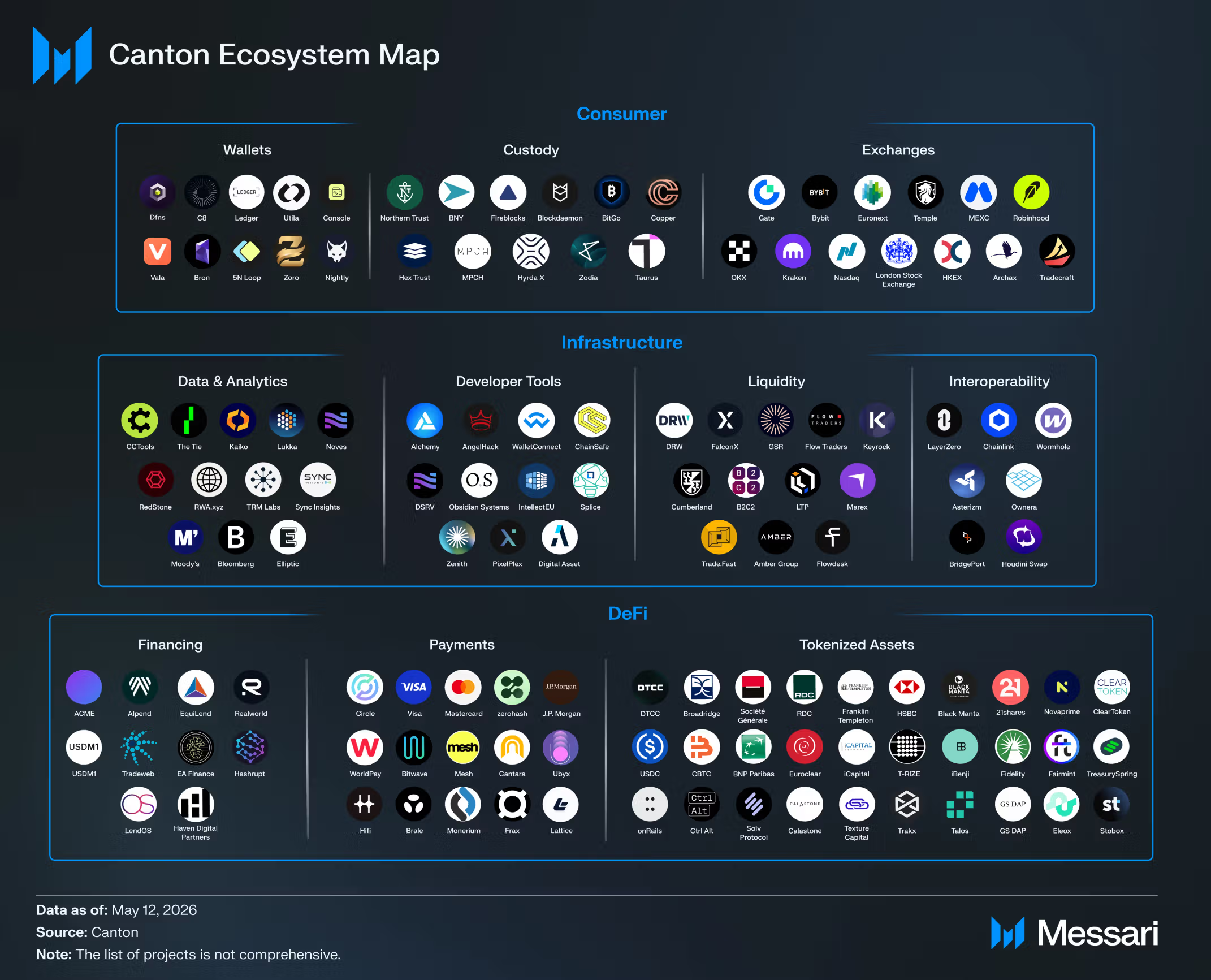
Canton’s ecosystem spans institutional settlement infrastructure, tokenized assets, and financial applications:
- Broadridge DLR: Broadridge’s Distributed Ledger Repo platform is one of the clearest examples of Canton operating at an institutional scale. Broadridge DLR processes more than $8 trillion in monthly repo volume on Canton infrastructure. This activity currently occurs between institutions on a private synchronizer, so does not generate CC fees. Recent strategic investments by Broadridge and Digital Asset in HQLAx signal a broader effort to consolidate repo and collateral mobility workflows onto Canton’s shared network infrastructure over time.
- DTCC Tokenized Treasuries: Developing a service to tokenize DTC-custodied U.S. Treasury securities on Canton, with an MVP and broader rollout expected in H2 2026. If rolled out as planned, the initiative would place Canton-linked infrastructure closer to core U.S. market plumbing.
- Franklin Templeton Benji: Franklin Templeton expanded the Benji Technology Platform, which underpins its tokenized money market fund, to Canton. This enables tokenized fund shares to operate within a network that supports privacy-preserving transactions and interoperability with other financial applications and treasury use cases.
- Kinexys by J.P. Morgan: Plans to bring JPM Coin (JPMD), its USD-denominated deposit token, natively onto Canton through a phased 2026 rollout, enabling onchain settlement using bank-issued digital deposits.
- Chainlink: Joined Canton as a Super Validator in September 2025 and is deploying infrastructure, including CCIP, Data Streams, and Proof of Reserve, expanding interoperability and data availability.
- Lattice: A neobank built on Canton, focused on delivering institutional-grade account infrastructure and payment rails integrated with regulated financial systems.
- ClearToken: A regulated digital asset infrastructure provider deploying CT Register, CT Pay, and CT Settle on Canton to support tokenized asset issuance, payment-versus-payment (PvP) foreign exchange, and delivery-versus-payment (DvP) settlement across fiat, stablecoins, and crypto assets.
- TreasurySpring: A digital cash investment platform bringing Fixed-Term Funds (FTFs) onchain, enabling tokenized instruments to be used as real-time collateral in treasury and repo workflows.
- Stobox: A real-world asset (RWA) tokenization platform supporting compliant issuance and lifecycle management of private market assets.
- Temple: A non-custodial Canton-native orderbook exchange designed for institutional capital markets, offering low-latency matching, price-time priority execution, and native compliance. Temple provides high-performance trading infrastructure with deep orderbook liquidity, RFQ and block trading capabilities, and non-custodial access to digital assets and RWAs.
- Tradecraft: A Canton-native decentralized exchange (DEX) designed to enable onchain trading without exposing strategies, positions, or counterparties. Built as an AMM, Tradecraft provides liquidity infrastructure for both institutional and crypto-native participants, supporting privacy-preserving trading across assets on Canton.
Recent partnerships and integrations within the Canton ecosystem include:
- April 13, 2026: HSBC completed a pilot of its tokenized deposit service on Canton, simulating issuance, transfer, and atomic settlement against digital assets to demonstrate interoperability across institutional infrastructure.
- March 26, 2026: LayerZero integrated with Canton Network as its first interoperability protocol, enabling institutions to move tokenized assets across over 165 blockchains while maintaining compliance and privacy requirements.
- March 25, 2026: Visa joined the Canton Network as a Super Validator, supporting privacy-preserving payment, settlement, and treasury use cases for regulated financial institutions.
- March 24, 2026: zerohash announced support for USDCx on Canton, enabling its enterprise partners to access USDC on the network as a settlement and payment instrument, while also providing interoperability with USDC from other chains.
- Feb. 24, 2026: Canton’s industry working group completed additional cross-border intraday repo transactions using tokenized assets, including cross-currency repo involving tokenized UK gilts, with participation from institutions including LSEG, Lloyds, Euroclear, DTCC, Citadel Securities, Tradeweb, and Société Générale.
- Feb. 23, 2026: Zebec Network entered the Canton ecosystem through a partnership with Lattice Finance to explore real-time payments and card infrastructure for Canton-based applications.
- Feb. 18, 2026: EDENA Capital announced plans to bring sovereign-linked assets onchain using Canton-based infrastructure, with an initial pipeline in the tens of billions of dollars.
Network Metrics
Public metrics for Canton are more limited than on most transparent blockchains due to its configurable privacy model. Applications, institutions, and users can control what transaction data is shared, meaning a significant portion of activity is not directly observable on public infrastructure.
Activity on the Global Synchronizer, particularly through Canton Coin, provides visibility into network usage, including metrics such as fee burn, token supply, and application-level activity. As more workflows leverage shared infrastructure and analytics providers expand coverage, these signals are expected to become increasingly representative of overall network utility.
Publicly available sources such as Cantonscan, 5N Lighthouse, and The Tie provide insight into network activity. As of May 12, 2026, Cantonscan reported 38.51 billion CC in circulation, 105,300 active addresses over 24 hours, $2.1 million in 24-hour burn volume, 1.0 million private updates over 24 hours, and 518,500 million total transfers over 24 hours. Cantonscan also tracks the network’s daily burn/mint ratio, cumulative mint and burn activity, and app-, validator-, and Super Validator-level reward issuance over time.
These metrics show that observable activity on Canton extends beyond institutional settlement flows. Public dashboards expose traffic across a broad set of applications, and Lighthouse’s featured-apps view lists more than 100 applications and operators, indicating that a growing share of Global Synchronizer activity is being driven by wallets, trading venues, DeFi applications, data services, and other user-facing applications.
At the same time, public data does not fully reflect the scale of institutional usage across the network. As of May 12, 2026, RWA.xyz attributes $344.83 billion of represented asset value on Canton, with Broadridge DLR accounting for most of the visible RWA footprint. A range of institutional platforms, including HSBC Orion, Goldman Sachs DAP, and BNP Paribas Neobonds, operate on Canton infrastructure with limited public visibility. Additional deployments span other sectors, including Eleox in natural gas trading and Zinnia in insurance.
Roadmap
Canton does not yet publish a single consolidated public roadmap, but its development trajectory is communicated through Canton Improvement Proposals (CIPs), industry working groups, and publicly communicated protocol releases, which together signal the network’s technical and institutional priorities.
2026 Priorities
Institutional Assets and Applications
- DTCC’s tokenized U.S. Treasury MVP in a controlled production environment, targeted for H2 2026, with broader expansion expected thereafter based on client demand.
- Initial phases of the planned JPM Coin (JPMD) integration following the January 2026 announcement by Digital Asset and Kinexys by J.P. Morgan.
- Continued expansion of institutional use cases around collateral mobility, tokenized securities, and synchronized settlement through Canton industry working group activity.
Scale and Performance
- Scaling improvements targeting thousands of transactions per second (TPS) on the Global Synchronizer and substantially higher throughput across application-specific subnets. Throughput above 100,000 TPS across subnets has already been validated in testing environments.
- Migration of the Global Synchronizer from CometBFT toward a Canton-native ISS-based BFT consensus implementation.
- Reduction of onboarding constraints for validators and wallets to further expand network participation.
Usability and Infrastructure
- Tokenomics and governance updates, including CIP-0104 for traffic-based application rewards and CIP-0105 for Super Validator locking requirements.
- Increased flexibility in how users, wallets, and validators manage party hosting relationships, supporting greater portability, redundancy, and decentralization.
- Development of co-validation services that allow applications and users to distribute trust across multiple infrastructure providers.
- Developer and node operator enhancements, including logical synchronizer upgrades that allow protocol changes to be implemented without interrupting transaction processing, supporting continuous network upgrades without downtime.
Standards and Interoperability
- Continued development of CIP-0112, an iteration of the CIP-0056 token standard focused on privacy, performance, and institutional settlement workflows.
- Broader adoption of wallet interoperability standard CIP-0103.
- Expansion of the CNS public data registry to improve application and asset discovery across the network.
Open Source and Ecosystem Participation
- Continuing to make it easier for developers and infrastructure providers to contribute to open-source Canton software.
- Further simplification of validator onboarding processes.
Longer-Term Strategic Priorities
- Continued focus on integration of regulated digital cash and tokenized collateral across Canton-based applications and markets.
- Additional protocol features supporting privacy-preserving DeFi applications.
- Public-party functionality to support more transparent applications and assets where privacy is not required.
- Public verifiability mechanisms for private transactions to support trust-minimized DeFi with configurable privacy.
- Expanded smart contract language support beyond Daml.
The roadmap reflects Canton’s broader strategic focus on institutional settlement infrastructure, collateral mobility, tokenized assets, and privacy-preserving interoperability across regulated financial applications.
Closing Summary
Canton is purpose-built for regulated financial markets, combining synchronized settlement with configurable sub-transaction privacy in a way that most blockchains do not. Its architecture allows independent applications to interoperate across shared infrastructure without requiring full data transparency or a single globally replicated state, making it well-suited to confidential, multi-party financial workflows.
This design has already translated into meaningful institutional adoption. Broadridge, DTCC, J.P. Morgan, and Tradeweb are just a small sample of the important organizations building on Canton infrastructure, while the broader institutional ecosystem is increasingly oriented around collateral mobility, tokenized assets, regulated cash, and institutional settlement workflows. A growing set of crypto-native applications is also emerging on Canton, leveraging its privacy model and access to institutional users. Historically, much of Canton’s highest-value activity has occurred in private deployments using the same underlying technology. The next phase is the expansion of these workflows into shared infrastructure, where tokenized collateral and regulated cash increasingly interoperate through the Global Synchronizer.
This shift toward shared, fee-generating infrastructure is central to Canton’s economic model. Early traction is concentrated in collateral mobility and synchronized institutional settlement, where Canton is already being used by major financial institutions. As these workflows increasingly converge onto interoperable shared infrastructure, shared-network settlement and coordination activity could become an important driver of CC’s long-term utility and value accrual. Governance, reward design, and the relationship between private deployments and public-network usage will continue to shape Canton’s next phase of development.
Looking ahead, the most important milestones are the rollout of DTCC’s tokenized Treasury initiative, the phased integration of JPM Coin (JPMD), and continued growth in applications using Canton for synchronized settlement and regulated asset movement. Canton’s long-term success will be defined less by early-stage deployments and more by the scale and pace of adoption of its shared infrastructure for composable collateral and cash movement across global capital markets.