
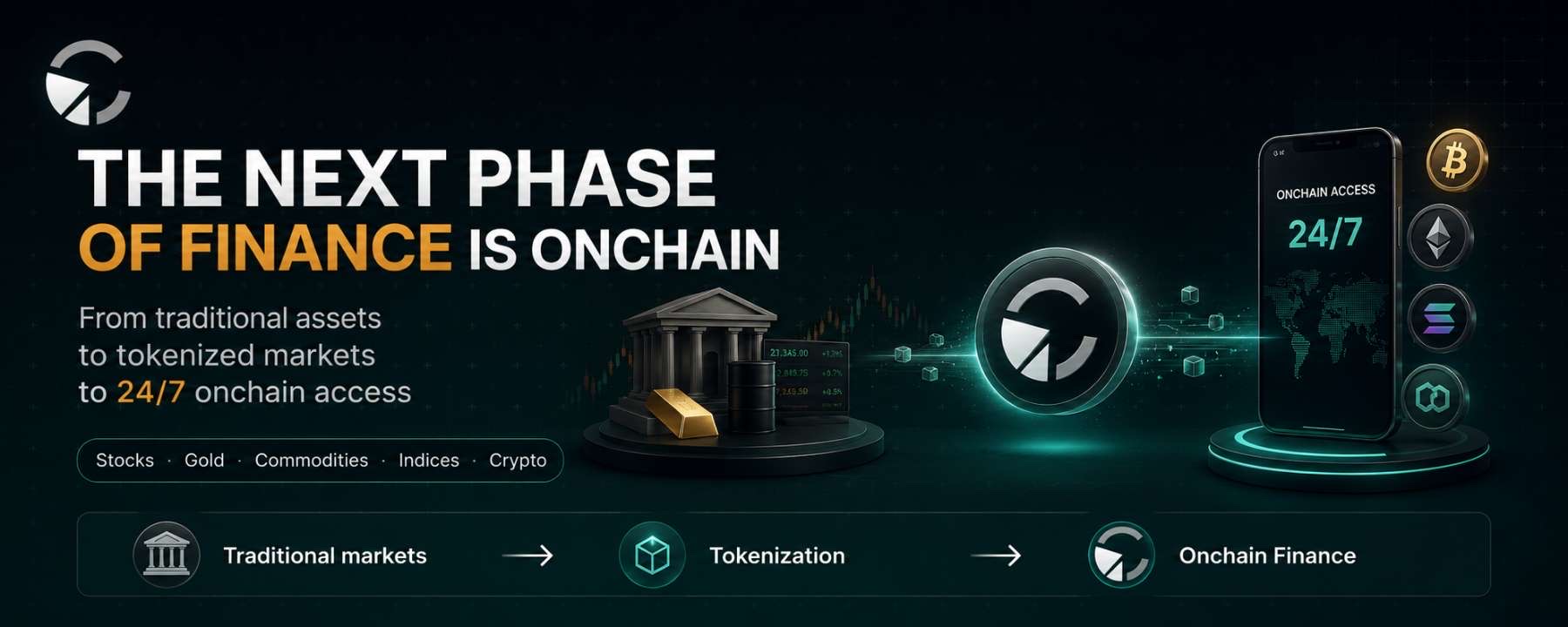
 Canborsa and the Next Phase of Onchain Finance: Bringing Real-World Markets Into DeFi


·
16h
for most of crypto’s history, the focus has been on building a new financial system around digital assets.
Bitcoin gave us digital money.
Ethereum gave developers programmable financial infrastructure.
DeFi showed that trading, lending and other financial services could work onchain without depending entirely on traditional intermediaries.
but there is another part of the financial system that crypto has barely touched.
the assets themselves.
Stocks. Gold. Oil. Indices.
Real estate and other real-world assets still sit largely inside traditional financial infrastructure.
that is where the RWA conversation becomes interesting.
and it is also where
is trying to position itself.
The Real Opportunity With RWAs
0:06 / 0:26
Real-world assets are not a new concept.
what is changing is the infrastructure around them.
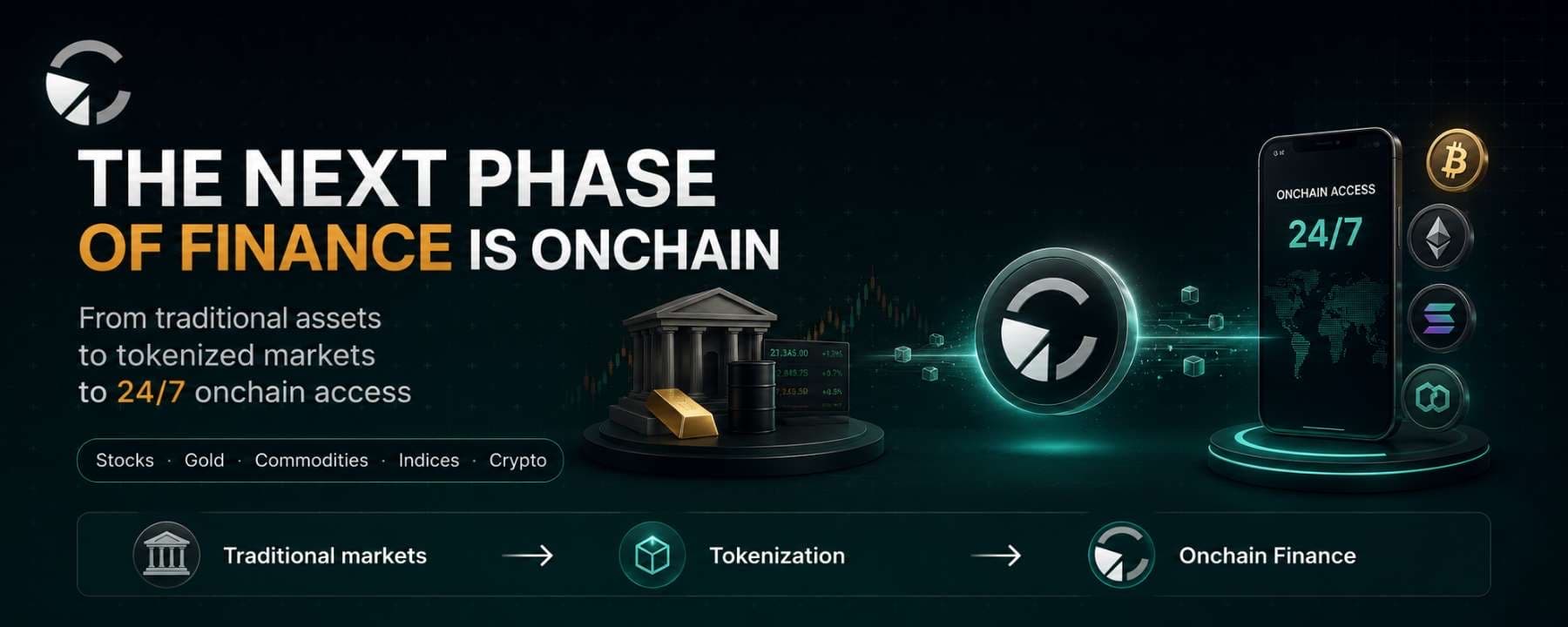
Tokenization allows an asset or financial instrument that exists outside the blockchain to be represented digitally onchain. that representation can then potentially be transferred, traded or integrated with blockchain-based financial applications.
the important question is not simply whether a stock or commodity can be tokenized.
it is what happens after it gets onchain.
- can it trade outside traditional market hours?
- can it interact with DeFi?
- can traders use familiar crypto-native products around it?
- can different asset classes sit next to each other instead of being separated across several platforms?
that is where things start getting interesting.
Canborsa describes its platform as an AllFi trading environment built around crypto, stocks, commodities, indices and emerging onchain markets.
The Problem Is Still Fragmentation
think about the experience of a modern trader.
crypto is usually somewhere.
stocks are somewhere else.
commodities are somewhere else again.
then there are derivatives, wallets, different chains and different platforms for each part of the portfolio.
you end up spending a lot of time navigating infrastructure before you even get to the actual market.
Canborsa is taking a different approach.
instead of creating another isolated crypto venue, it is trying to bring multiple asset classes into one trading environment.
its current platform shows markets across stocks, crypto, commodities, indices and emerging assets. the website currently lists 36 available markets across six supported networks. (
)
the idea is simple:
- one interface.
- multiple markets.
- onchain.
that sounds obvious, but getting there is not.
This Is Where The “AllFi” Idea Comes In

i think the most interesting part of Canborsa is not any individual market.
it is the direction of the product.
crypto and traditional finance have spent years developing separately.
Canborsa is betting that the next phase looks more connected.
a trader shouldn’t necessarily have to care whether an opportunity comes from BTC, gold, a stock or an index before accessing it.
the market is the market.
the infrastructure should make the difference less important to the user.
that is essentially the thinking behind Canborsa’s AllFi approach.
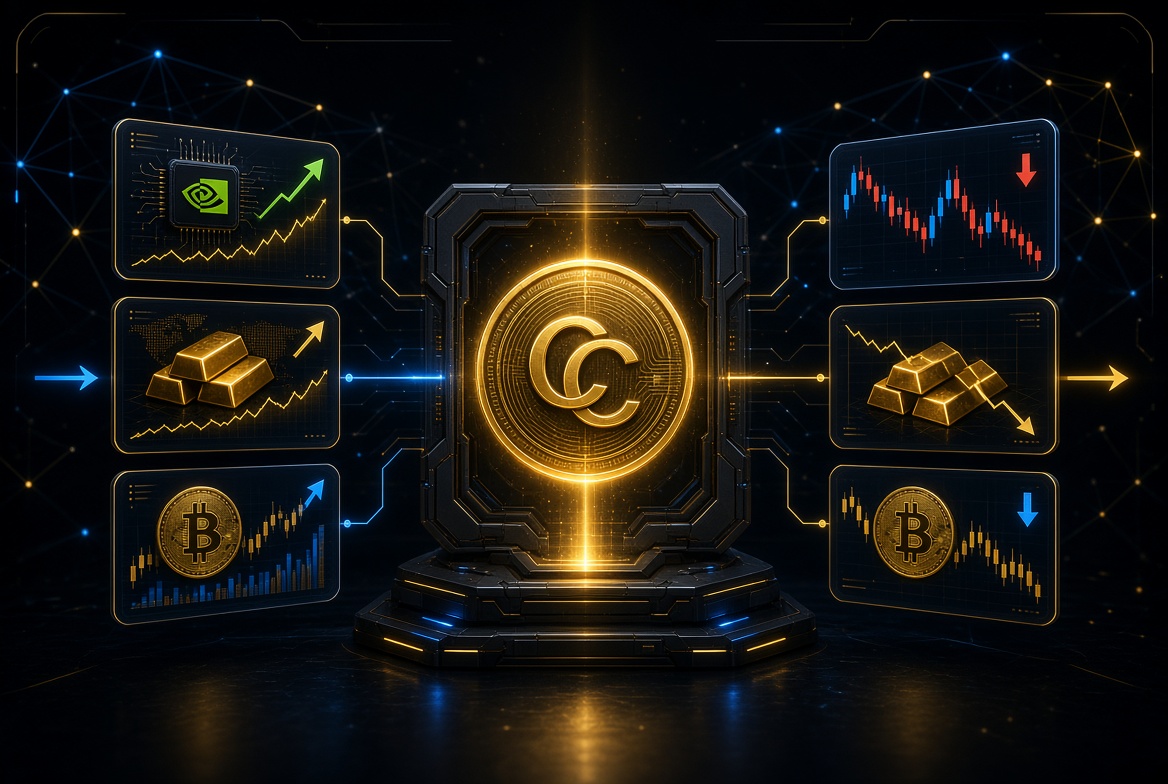
the platform currently shows assets such as NVIDIA, Tesla, Apple and Microsoft alongside crypto and commodity markets.
Then There Is The Perpetuals Angle
this is probably the part of Canborsa that deserves more attention.
perpetual contracts became one of crypto’s most important trading products because they allow traders to take long or short positions without dealing with a traditional expiry date.
BTC perps.
ETH perps.
SOL perps.
crypto made the instrument mainstream.
Canborsa is taking that same idea into real-world assets.
its platform currently offers perpetual markets around assets including BTC, ETH, stocks and gold, and positions itself as the first perpetuals DEX on Canton Network.
that is more interesting than simply saying “stocks are now tokenized.”
the bigger idea is that financial products developed inside crypto can potentially be applied to tokenized versions of traditional assets.
that is where TradFi and DeFi start to overlap.
Why Canton Network Matters

the infrastructure underneath an RWA platform matters just as much as the front end.
Canborsa is built on Canton Network and highlights three areas in particular: privacy, atomic settlement and institutional-oriented infrastructure. (
)
that matters because financial markets have different requirements from a typical public crypto application.
transparency is useful but institutions also care about privacy.
speed matters but settlement certainty matters too.
Canton is designed around privacy-enabled transactions and atomic settlement, which Canborsa uses as part of the infrastructure behind its RWA trading environment.
for the RWA market to grow beyond speculation, these infrastructure questions are going to matter more.
It is not just about trading
Canborsa’s roadmap also points beyond its current trading products.
the platform lists prediction markets, lending, yield products and tokenized real estate among planned developments.
that gives the project a broader direction.
trading could be the entry point but the bigger goal could also be building more financial activity around tokenized assets.
imagine being able to trade an asset, use it within a financial application, potentially earn from it and eventually interact with other markets without constantly moving between different systems.
that is where the RWA thesis becomes much bigger than tokenization.
the asset becomes part of an ecosystem.
The User Experience Will Matter
this is something I think gets overlooked in most RWA conversations.
the technology can be impressive.
the market opportunity can be huge.
the infrastructure can be institutional grade.
but if using the product feels complicated, adoption becomes harder.
Canborsa’s current onboarding is built around a relatively straightforward flow: create an account, fund it, choose a market and trade, then track performance from the dashboard.
that simplicity matters.
most traders don’t want to think about the underlying infrastructure every time they open a position.
they want to find a market, understand the risk and execute.
the best onchain financial products will probably be the ones that make the blockchain part feel almost invisible.
There Is Still Plenty To Prove
this is where I would separate the thesis from the hype.
RWA is promising but it isn’t risk-free.
tokenized assets can introduce counterparty risk.
liquidity can vary between markets.
smart contracts can fail.
oracles can create problems.
the legal structure behind a token matters.
and leverage makes any trading product significantly more risky.
Canborsa itself acknowledges several of these risks in its educational material around RWAs.
so the interesting question isn’t whether Canborsa can make RWAs sound exciting.
the question is whether the product can build enough liquidity, reliability and user trust to make onchain access to these markets genuinely useful.
that is what I would be watching.
Why Canborsa Is Worth Watching
there are plenty of projects using the RWA narrative right now.
the difference is in what they are actually building.
Canborsa isn’t only talking about tokenization.
it is putting tokenized assets into a trading environment alongside crypto, commodities and indices.
it is bringing perpetuals into the RWA conversation.
it is building on Canton Network.
it is working toward a broader ecosystem that includes prediction markets, lending, yield and tokenized real estate.
and it is trying to make all of that accessible through one interface.
as of the latest information on its website, Canborsa reports more than $7.5M in total trading volume, 19,800+ users, 44,000+ trades and swaps and 36 available markets.
those numbers will obviously change over time.
what matters more is what happens next.
- can the platform continue to grow liquidity?
- can it attract serious traders?
- can it make tokenized markets useful beyond the initial narrative?
- can it build a real bridge between crypto-native markets and traditional assets?
those are the questions worth following.
The Bigger Picture
the future of DeFi isn’t necessarily about choosing between crypto and traditional finance.
it could be about removing that distinction altogether.
crypto gave us programmable money.
DeFi gave us programmable financial services.
RWAs could give those systems access to a much wider universe of assets.
and platforms like Canborsa are trying to build the layer where users actually interact with those markets.
that’s the market Canborsa is positioning itself for.
not simply crypto onchain.
not simply stocks onchain.
but a broader financial environment where different asset classes can exist, move and interact within the same onchain ecosystem.
the RWA market is still developing.
the infrastructure is still being built.
the standards are still evolving.
but one thing is becoming increasingly difficult to ignore:
the next major chapter of DeFi may not be about creating more digital assets.
it may be about bringing the assets that already run the global economy onto the same rails.
and that is why I’m keeping an eye on
.
one platform. multiple markets. AllFi onchain. resources and further reading
Official Website:
Official Docs:
Canborsa learn / blog:
Canborsa RWA guidehttps://canborsa.com/blog/what-are-real-world-assets-rwa
Canton Networkhttps://www.canton.network/
Official Socials
Canborsa on Xhttps://x.com/Canborsa_DEX
Canborsa Telegramhttps://t.me/canborsa_dex
This article is for educational purposes only and is not financial or investment advice. Always do your own research before trading or investing.