

Hold the coin. Trade the market.
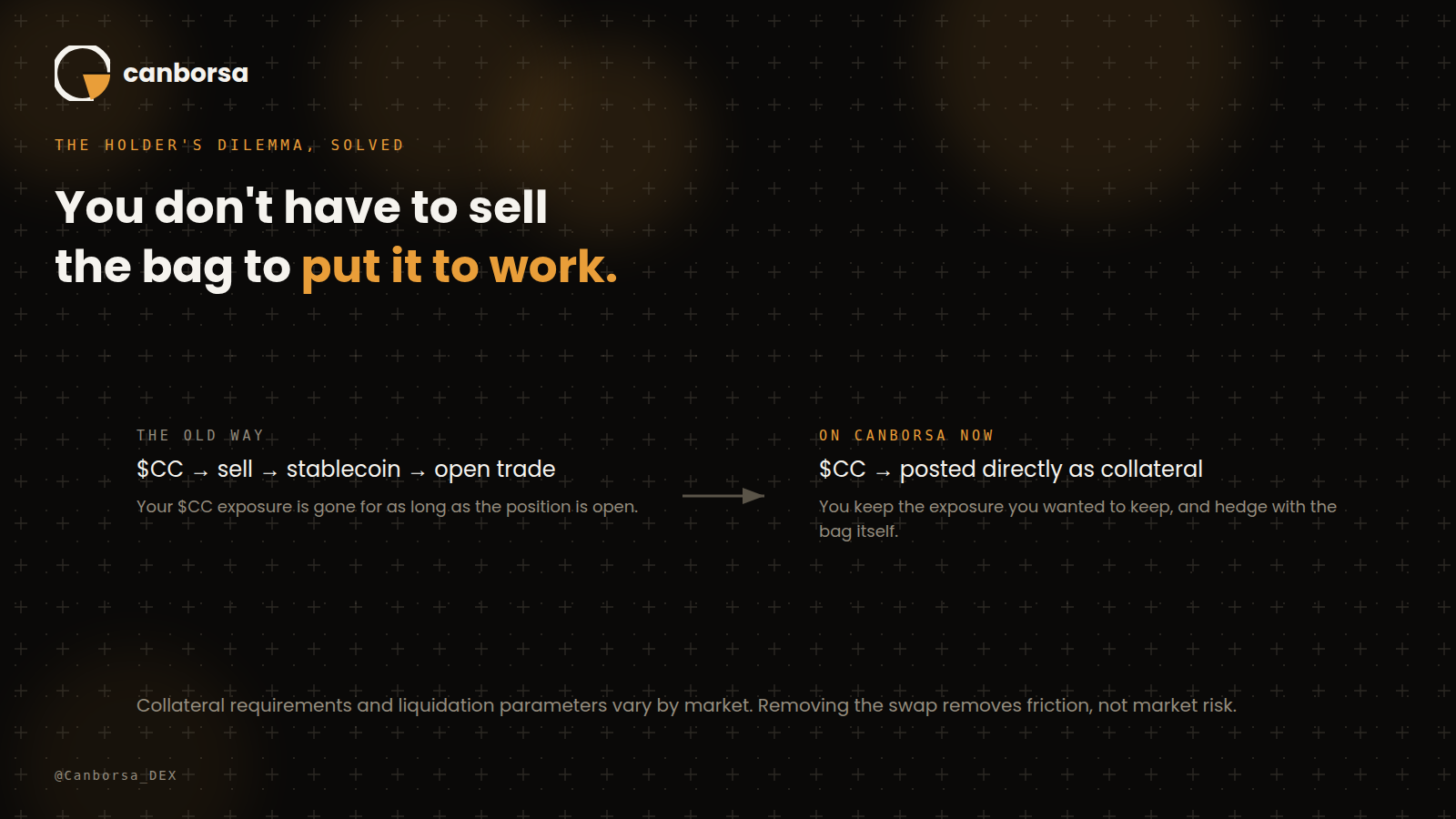
A $CC holder used to have two settings. Leave Canton Coin in the wallet, or sell it for a stablecoin so a trade could start. Holding meant the coin sat idle. Selling meant the bag was gone for as long as the position was open. If $CC moved while you were in a stock or a gold perp, that move was no longer yours. You traded your conviction for a trade ticket.
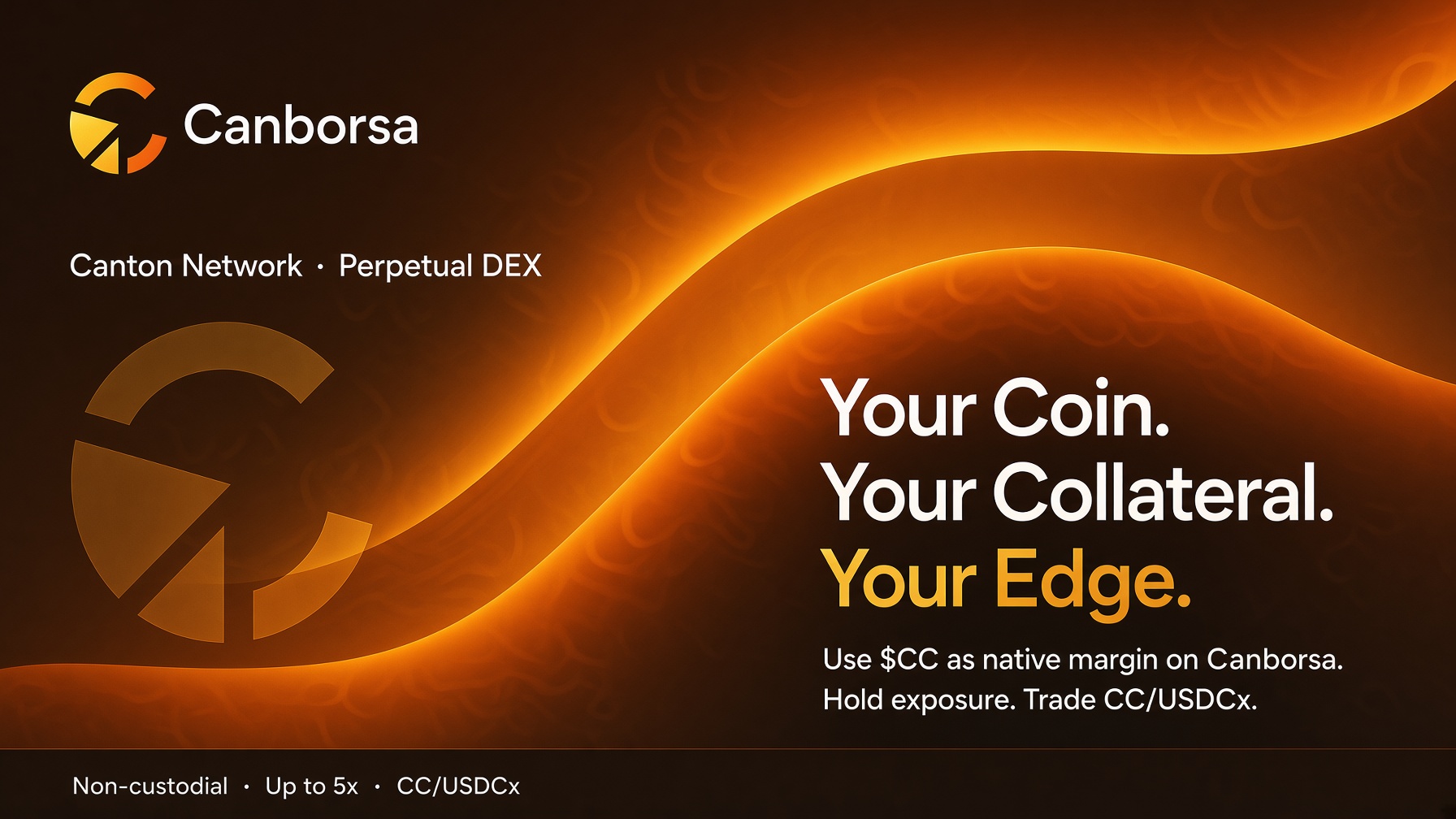
On 1 October 2026, @Canborsa_DEX opened a third setting. Canton Coin, the native token of Canton Network, can now be posted as direct collateral for all RWA and crypto perpetual markets on the DEX. No swap into a stablecoin first. No separate step. Pick $CC, then go long or short.
What you are actually trading
A perpetual is a contract on a price. You post collateral, and the contract lets you take a larger position than that collateral. Long means you gain if the price rises. Short means you gain if it falls.
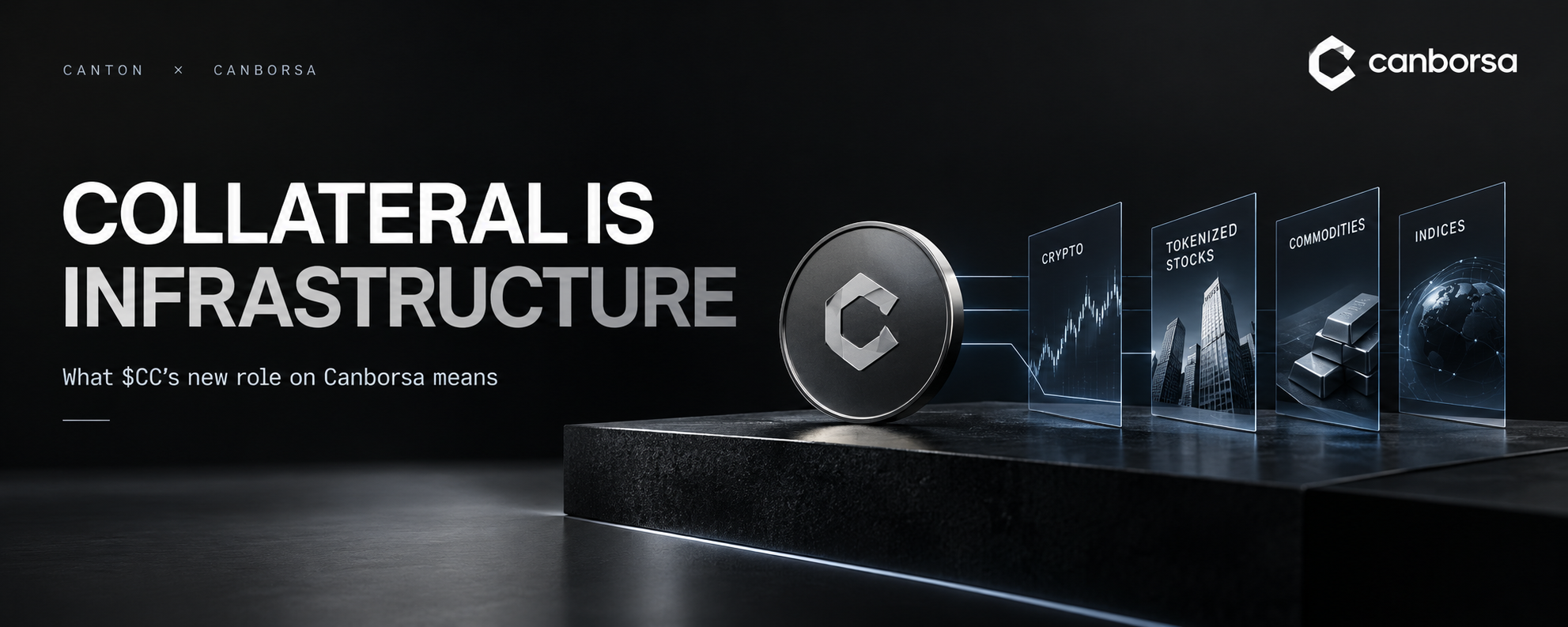
Canborsa is a non-custodial perpetual DEX that bridges crypto and traditional finance. The platform features a unified interface for crypto, tokenized equities, commodities, and indexes. They called that mix "AllFi." You can now use your $CC to trade markets like Bitcoin, Ethereum, Apple, Nvidia, Tesla, gold, silver, and oil, tradable 24 hours a day. The current book can be wider. Check the selector.
The platform lists up to 30x. The CC/USDCx pair, when $CC collateral first launched in August, was capped at 5x. The multiplier on your ticket is the one that counts.
The mechanics of margin
When you post $CC as collateral, your $CC becomes the margin backing the perpetual position. You can keep your $CC exposure while using it as collateral, subject to the platform's margin and liquidation rules.
This is the exact mechanism that breaks the holder's dilemma. If you are long $CC but believe the broader tech market is overheating, you can short a tokenized stock using your $CC as margin. You don't have to sell your $CC first, so you can hedge without deliberately exiting the exposure you wanted to keep.
$CC is volatile, the applicable collateral requirements and liquidation parameters can vary by market. Not swapping into stables removes friction, but it does not remove market risk. If the coin falls while the trade goes against you, the margin shrinks from both sides.
The 5,000 $CC competition
Canborsa opened a 14-day trading competition around the new collateral.
The top 10 on the leaderboard share a 5,000 $CC pool. Alongside the leaderboard, there is also a daily random draw: one trader who generates over $1,000 in volume that day receives 250 $CC. That gives active traders another reason to participate during the launch.
The Quest Layer
The launch is also integrated into Canborsa's broader quest system to reward early adoption. The official quest card outlines point multipliers for trading with $CC, reaching volume milestones, and spreading the word about the new collateral option.
The close
On Canborsa, you no longer have to sell $CC to open the hedge. $CC can now be the margin for Canborsa's stock, crypto, and commodity perps. Holders do not have to sell it for a stablecoin before they trade. The top 10 over 14 days share 5,000 $CC, and daily volume unlocks extra draws.
If you already hold $CC, which market would you use it to trade first: crypto, equities, or commodities?
You don't have to sell the bag to put the bag to work.
Explore the markets, check your collateral options, and track the leaderboard here: https://go.canborsa.com/paH
@Canborsa_DEX