
All Content by Kidsbrow
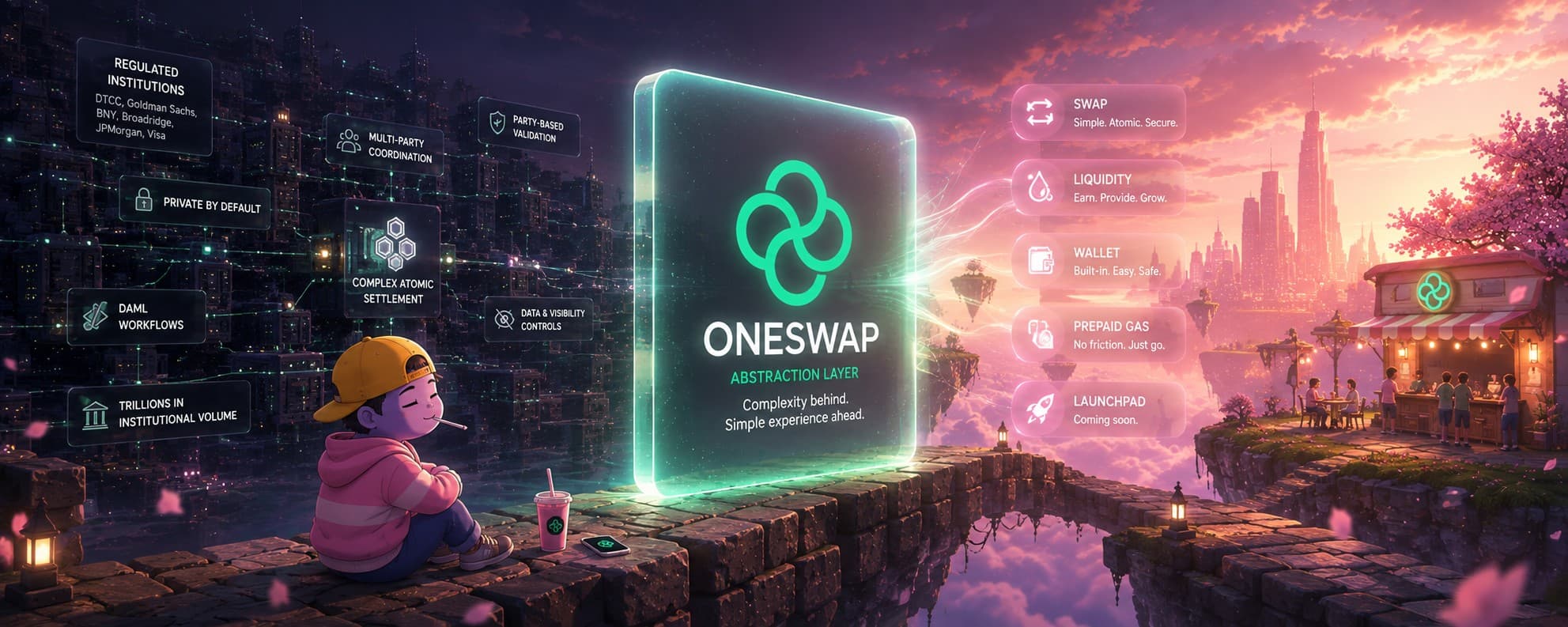
What OneSwap Reveals About Canton’s Structural Surface Problem
OneSwap exposes a structural tension at the heart of Canton: the same privacy and multiparty architecture that makes it attractive to institutions also creates friction for retail users. Its growing abstraction layer offers a potential solution, but whether it can scale without changing the character of the network remains an open question.

Cancore and the Challenge of Bringing Liquidity to Canton
Cancore is addressing one of Canton’s most important next challenges: connecting its privacy-focused, high-assurance settlement environment to broader external liquidity without sacrificing native assets, self-custody, or atomic settlement. Its evolution from a settlement layer toward a broader Liquidity OS expands the focus from simply moving assets to making them useful through trading, liquidity access, and eventually automated execution. Early activity shows that the infrastructure is already operational, but the harder test is whether cross-environment connectivity becomes a repeatable and economically meaningful financial workflow rather than simply a technical possibility. The core opportunity is to bridge Canton’s privacy and settlement strengths with the liquidity and composability of public markets without forcing users to give up the properties that make Canton valuable.



Tradecraft: Liquidity Built for Canton's Privacy Model
Tradecraft adapts AMM liquidity to Canton’s privacy-first architecture. Its two-step swap flow reflects Canton’s ownership and consent model, while time-based LP incentives compensate providers for committing capital despite limited visibility into counterparties. With early liquidity concentrated in CC/USDCx, the key question is no longer whether the architecture works, but whether enough capital will accept the privacy trade-off and scale the market to institutional depth.


The Merkle Boundary in Ekiden
Ekiden separates fast off-chain matching from on-chain custody. Merkle verification ensures collateral only moves after a batch is validated, so an engine failure becomes a liveness issue rather than a custody risk. The remaining concern is sequencing authority: Merkle proofs can verify what was committed, but not whether the ordering itself was fair. Real institutional volume and mainnet deployment will ultimately test whether this architecture works as intended.

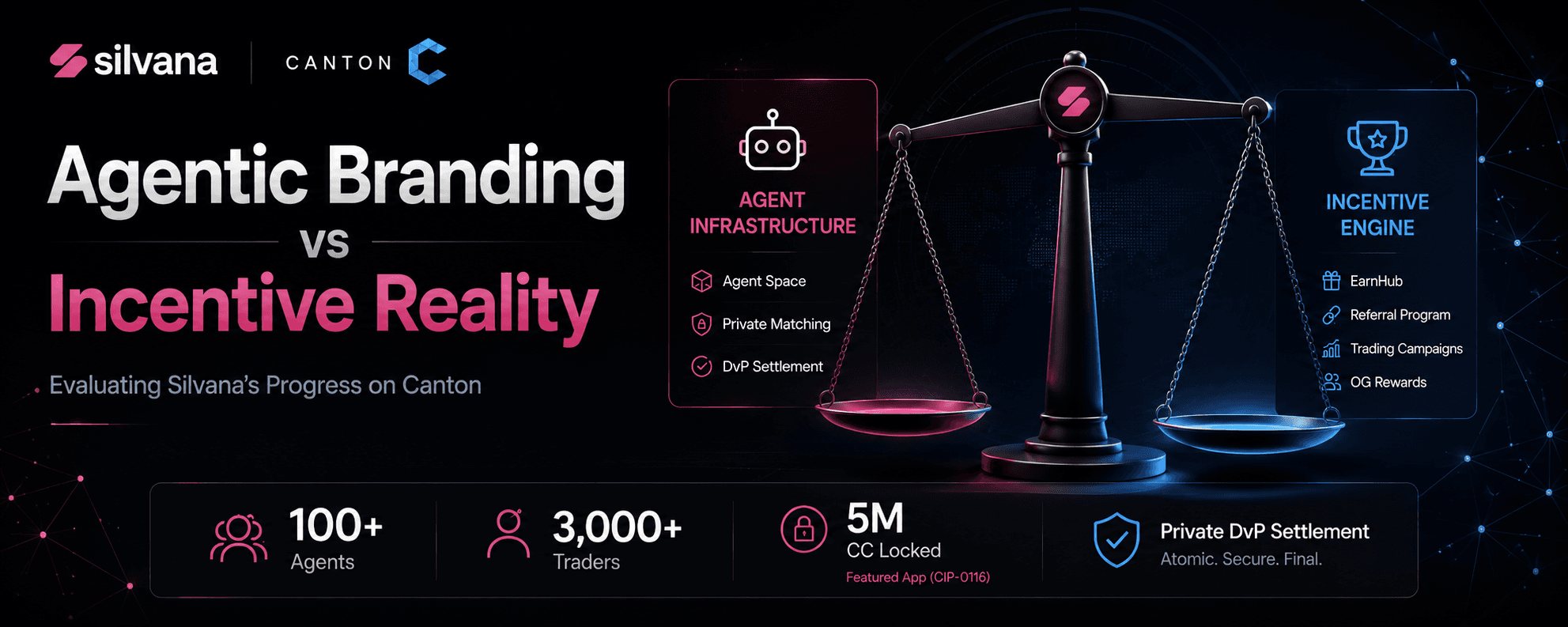
Agentic Branding vs. Incentive Reality: Evaluating Silvana's Progress on Canton
Silvana has built one of the strongest agentic narratives on Canton, but its public ecosystem is still largely driven by incentive programs such as EarnHub. While its privacy-first architecture makes independent verification difficult, the key question is whether autonomous agents will eventually become the primary driver of activity as reliance on incentives declines.


