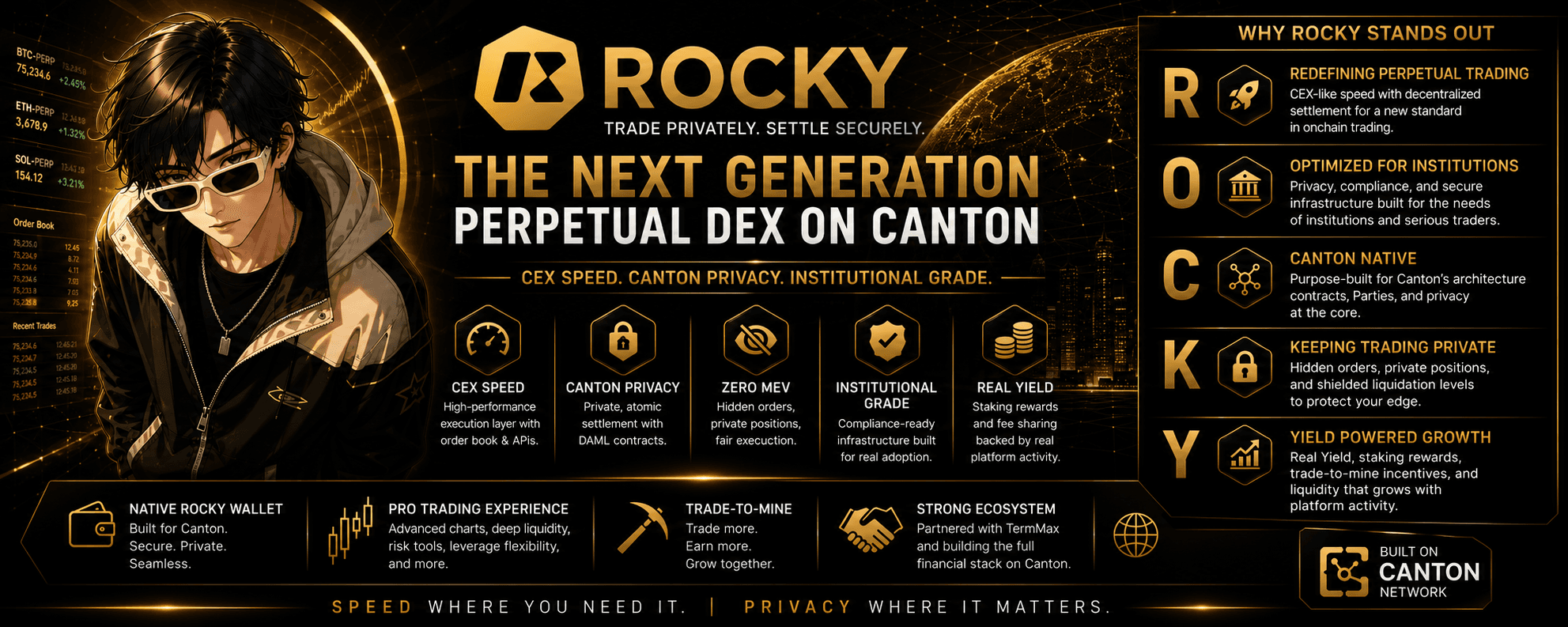

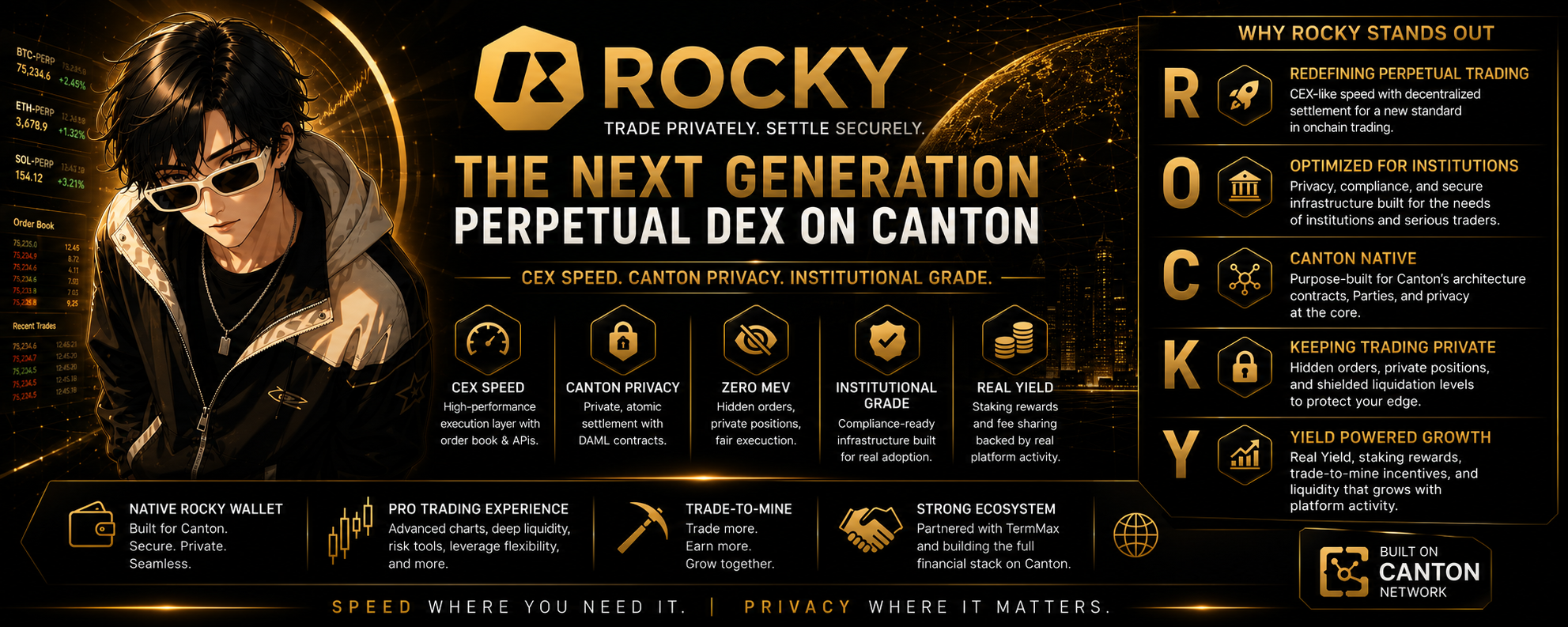
 Most people look at Rocky and see another perpetual DEX. I see something much bigger. As tokenized assets continue to grow, the real challenge isn't creating them. It's building the infrastructure that allows those assets to be traded, settled, and financed efficiently. That's exactly what Rocky is setting out to do. Built on the Canton Network, Rocky combines high-speed trading, privacy, and institutional-grade infrastructure into one platform. Let's break down the first three pillars behind R O C K Y.
R — Redefining Perpetual Trading Perpetual trading has become one of the most popular products in crypto. But there's still one big trade-off. If you use a centralized exchange, you get speed but give up custody of your assets. If you use a decentralized exchange, you keep control of your funds but often sacrifice speed, efficiency, and trading experience. Rocky believes traders shouldn't have to choose. Its architecture combines the best of both worlds. The Execution Layer handles everything that needs to be fast, including order matching, order book trading, APIs for market makers, and real-time risk management. Once a trade is executed, the Settlement Layer takes over, using Canton's privacy-enabled DAML contracts to settle transactions securely and atomically. The result is simple: Fast trading without sacrificing decentralization. That's not just an upgrade. It's a different way of thinking about on-chain trading.
O — Optimized for Institutional Finance Institutions don't just need liquidity. They need privacy. They need security. They need infrastructure that meets real-world financial standards. This is where many public blockchains fall short. Because every transaction is visible, institutions often cannot move capital the way they do in traditional finance. Rocky takes a different approach. By building on Canton, it gives institutions access to blockchain technology without exposing sensitive trading information. That makes Rocky suitable for:
- Professional trader
- Market makers
- Asset managers
- Financial institutions
Instead of asking institutions to adapt to crypto, Rocky is building crypto infrastructure around institutional needs.
C — Canton Native One of Rocky's biggest strengths is that it wasn't built for another blockchain and later migrated to Canton. It was designed for Canton from day one. That matters because Canton works differently from most public blockchains. Assets exist as contracts. Identity is tied to Parties. Privacy is built directly into every transaction. A traditional wallet wasn't designed for this model. So Rocky built its own. The native Rocky Wallet supports:
1. Canton Mainnet
2. Local encryption for better security
3. Multi-asset support including CC, cETH, and USDCx
4. Secure transfers
5. Address book management
Instead of adapting Ethereum-style tools, Rocky created a wallet that fits Canton's architecture from the ground up. That means a smoother experience for users and a stronger foundation for future growth.
Final Thoughts The first three letters of R O C K Y reveal a clear vision. Rocky isn't trying to build another exchange. It's building the infrastructure that institutional finance needs to operate confidently on-chain. From faster execution to native Canton integration, every design choice moves toward that goal. But speed and infrastructure are only part of the story.
In Part 2, we'll look at why Keeping Trading Private and Yield Powered Growth could become Rocky's biggest advantages and why they may help define the future of trading on Canton.