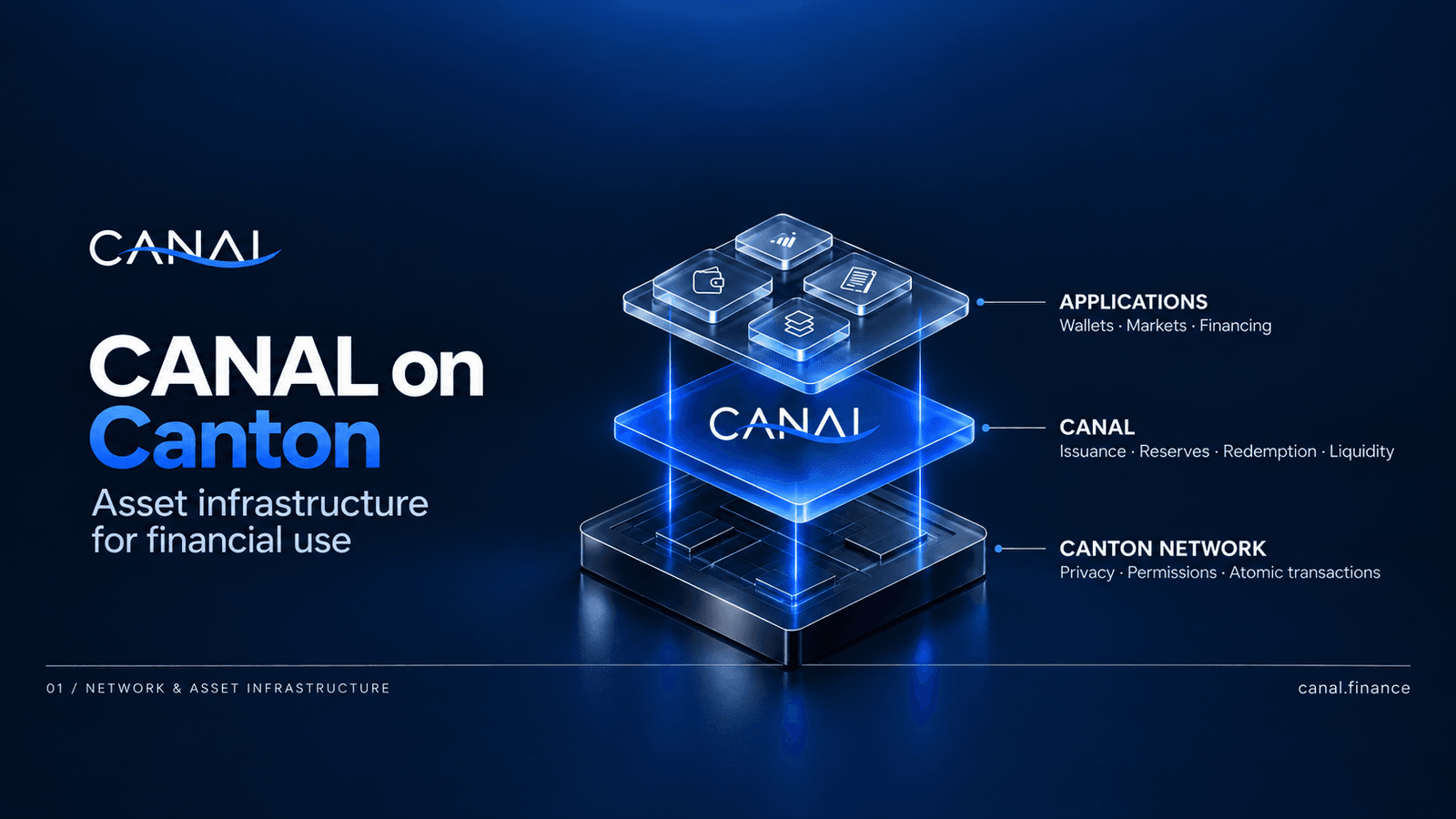
CANAL is building iSOL, a Canton-native asset designed to be backed one-to-one by native SOL and redeemable under defined product terms. It is the first asset in CANAL's iAsset roadmap, bringing the development focus into view: SOL exposure on Canton, supported by issuance, reserve information, redemption and liquidity infrastructure.
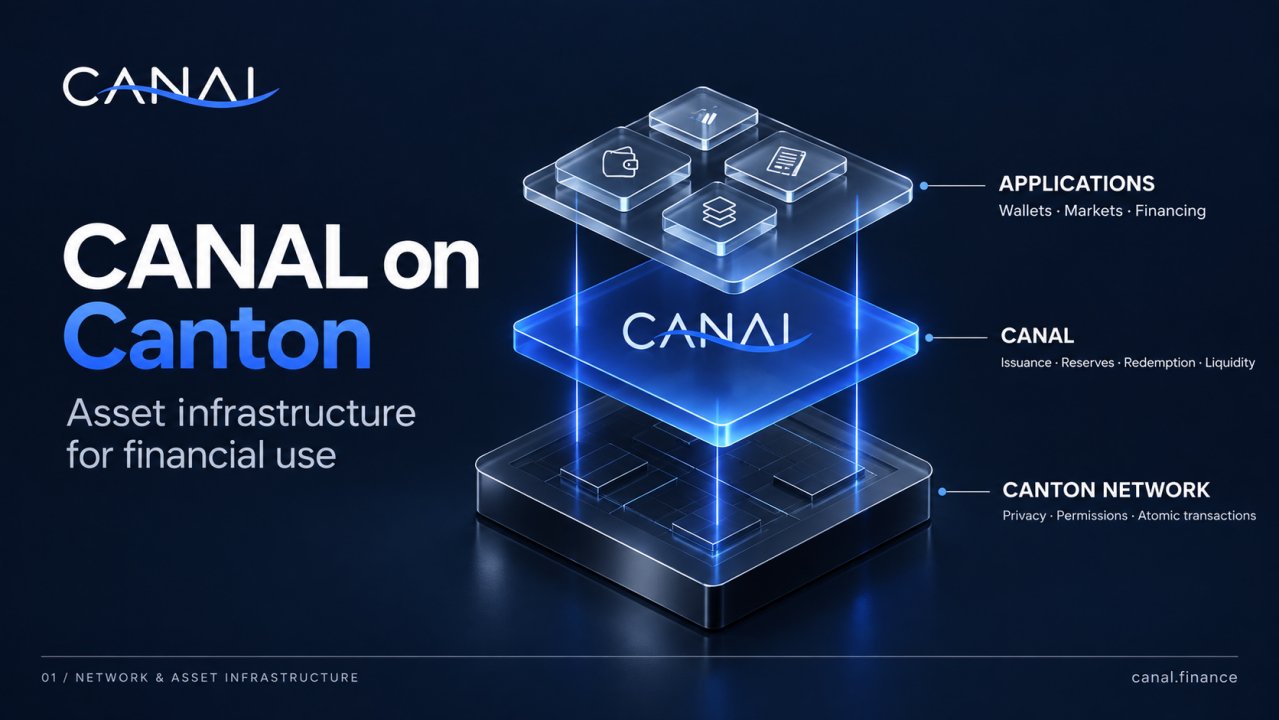
A token needs a working life after minting. CANAL is building the asset infrastructure for that life; Canton provides the network on which financial applications can coordinate its use.
Why Canton fits
Canton combines selective disclosure with atomic transactions across compatible applications. Participants can coordinate an exchange while controlling access to sensitive positions, counterparties and terms. In a properly implemented delivery-versus-payment workflow, the asset and payment move together or neither moves.
For iSOL, this creates a clear development context: an asset built for integration into wallets, trading and financing applications with defined permissions. CANAL develops the instrument and its operating processes. Applications establish their own access rules, market requirements and integrations.
Development begins with iSOL and the infrastructure behind it. Launch readiness depends on documented terms, reserve and redemption arrangements, and confirmed application support. Those are the deliverables that turn the design into a service.
The asset is only the beginning
CANAL starts with asset selection: real demand, meaningful liquidity and a clear financial use. A familiar ticker earns attention. A workable lifecycle earns its place in a financial application.

For iSOL, that lifecycle connects an instrument issued on Canton to native SOL held under the product's custody arrangements. Users need to understand the backing, the controls around issuance and the terms for returning to the underlying asset. These responsibilities continue for as long as the instrument remains outstanding.
CANAL's development scope covers four connected functions:
- Issuance defines who can mint the instrument, against what backing and on what terms.
- Reserve information makes the relationship between supply and backing assessable.
- Redemption establishes the route back to the underlying asset, including eligibility, conditions and timing.
- Liquidity infrastructure supports transactions after issuance through market access and integration work.
The same discipline applies to additional assets. Selection starts with the use case, then works through valuation, custody, redemption and market requirements. Demand on another network is a starting point; support on Canton must be built.
From issuance to a working market
iSOL gives CANAL a concrete integration agenda. Issuance creates the instrument. Wallet support makes it accessible. Trading requires executable liquidity. Financing requires an application's assessment of valuation, eligibility and collateral risk.

A trading workflow brings those responsibilities together. The holder needs an asset to deliver, an accepted payment instrument and a venue that can arrange the exchange. CANAL develops the asset infrastructure; cash issuers, wallets and venues provide their respective components. A shared network helps coordinate them, while each participant remains accountable for its part.
The Canton Token Standard provides common interfaces for holdings, transfers and allocations. CANAL's iAsset design follows this integration direction, giving development work a shared technical reference. Product compatibility still needs to be established and tested with each application.
Atomic settlement also has a defined boundary. A transaction on Canton does not automatically make custody or redemption on another network atomic. For a SOL-backed instrument, the underlying SOL remains subject to its own custody and release processes. The diagram separates those external processes from the Canton workflow for precisely this reason.
Clear backing with controlled visibility
Reserve transparency answers what backs an asset. Transaction privacy answers who can see a participant's activity. Good information design gives each question its own answer.

Canton's privacy model gives developers controls over information access, including designated observers where contracts provide for them. Reserve evidence remains the issuer's responsibility. Privacy settings are not a reserve statement.
CANAL's roadmap includes a unified view of three operating measures:
- Reserves: what backs the supply and where it is held.
- Supply: how much has been issued and how it changes.
- Redemption status: availability, conditions and expected timing.
The implementation must specify the evidence, verification methods and update frequency behind that view. The objective is useful operating information that users and integrators can assess throughout the holding period.
Yield gets its own product
The base asset comes first. CANAL's roadmap also includes yiAssets, a separate layer of share-based yield products. yiSOL is being designed around exposure to Solana staking returns, with its own structure, withdrawal conditions and risk controls. Keeping these layers distinct gives users a clearer basis for evaluating SOL exposure and staking exposure separately.
More assets with a reason to be used
CANAL's contribution to Canton starts with a specific task: developing curated assets and the processes that support them. iSOL is the first focus. The broader roadmap extends that work to additional assets and separate yield products.

For builders, an asset becomes easier to evaluate when its interfaces, supply information and redemption conditions are clear. Wallets can assess support. Venues can assess a market. Financing applications can assess collateral. Each makes its own integration and risk decisions.
CANAL's development priorities follow those practical needs: establish the base asset, document its operations and work through the integrations that make it usable. A completed connection is an engineering milestone; an available service also needs onboarding, operating controls and market support.
That is how CANAL and Canton fit together. Canton supplies the coordination and privacy capabilities. CANAL is building the asset layer that puts them to work, starting with iSOL.
The measure of progress is straightforward: assets people can access, understand, transact with and redeem under clear terms. The ticker is the introduction. The lifecycle is the product.
Explore Canal: www.Canal.finance