
Cauri’s fee guide, November 10; public update November 11, 2026. Source.
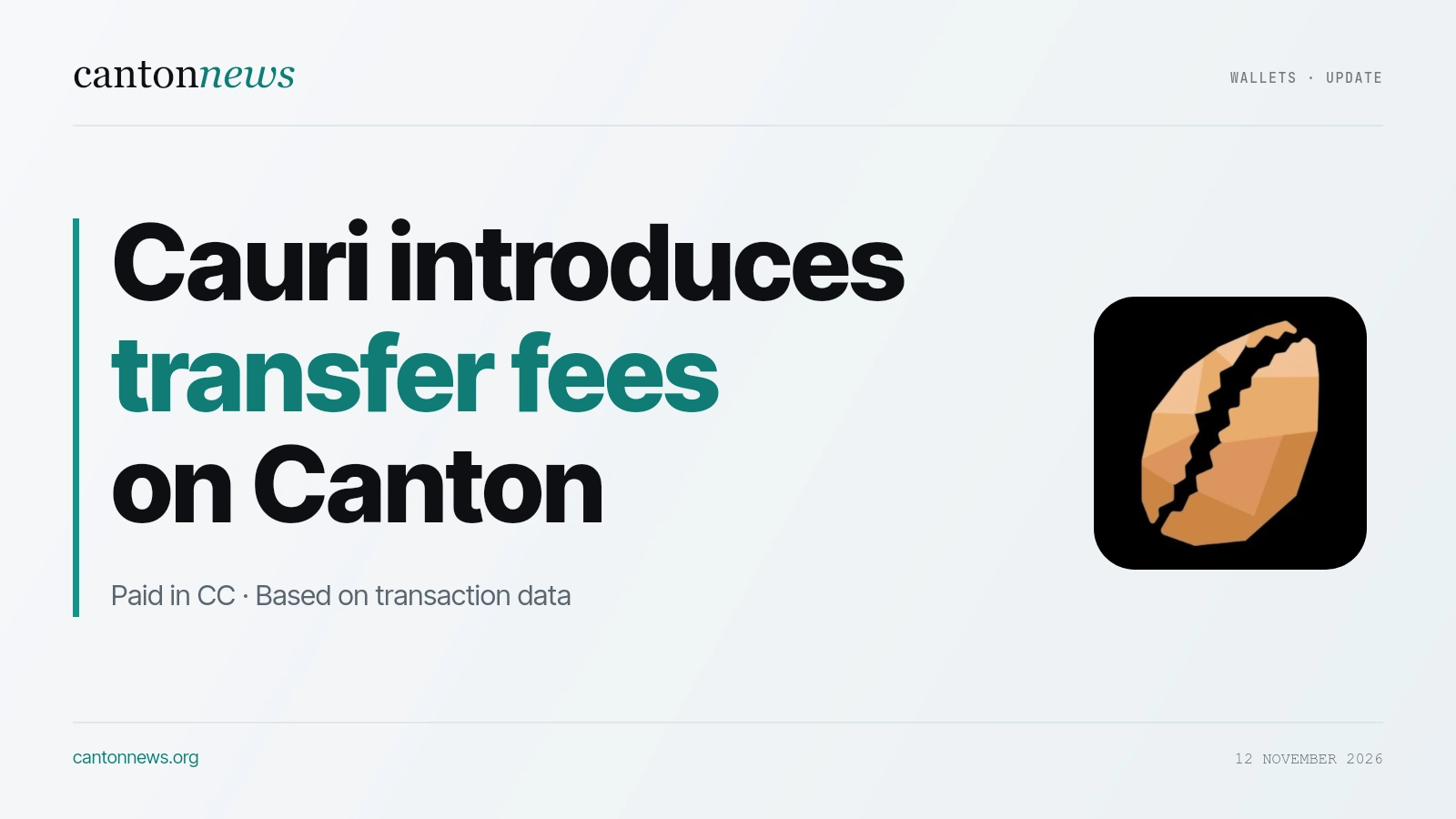
Cauri Wallet users now pay network fees when sending assets. Until the latest update, the wallet covered those costs for them.
In its new fee guide, developer Lithium Digital explains that the charge is based on the data a transaction sends across Canton. It is paid in Canton Coin, or CC, regardless of which asset the user transfers.
The change was announced to the Cauri community on November 11, following a November 10 explanation on Lithium’s website. The network cost already existed. What changed is who pays it.
At a glance
- Payment: fees are charged in CC, including when sending another asset.
- Calculation: Cauri says it measures the traffic cost of the particular transaction before sending it.
- Transfer size: the amount of money sent does not determine the fee; the amount of transaction data does.
- Destination: transfers between Cauri users generally need less traffic than transfers to another validator.
What does “traffic” mean?
On Canton, a validator hosts users’ identities and participates in their transactions. Traffic is the data it sends through the Global Synchronizer, the shared service that helps coordinate transactions between participants.
Validators buy that network capacity by burning CC. Cauri previously absorbed the cost for its users. It now passes the transaction cost on, saying it will charge at cost and work to reduce the traffic its transfers use.
The network prices traffic in US dollars, while payment is in CC. The CC amount can therefore change with CC’s price, even for transactions that use similar amounts of data.
Why two transfers can cost different amounts
Your displayed asset balance can consist of several separate pieces recorded on the ledger. A transfer that uses many pieces carries more data than one that uses a single piece. The number of validators receiving the transaction also affects its size.
That explains why a smaller-value payment is not automatically cheaper than a larger one. Cauri is measuring the work needed to process each transfer, rather than charging a percentage of the amount sent.
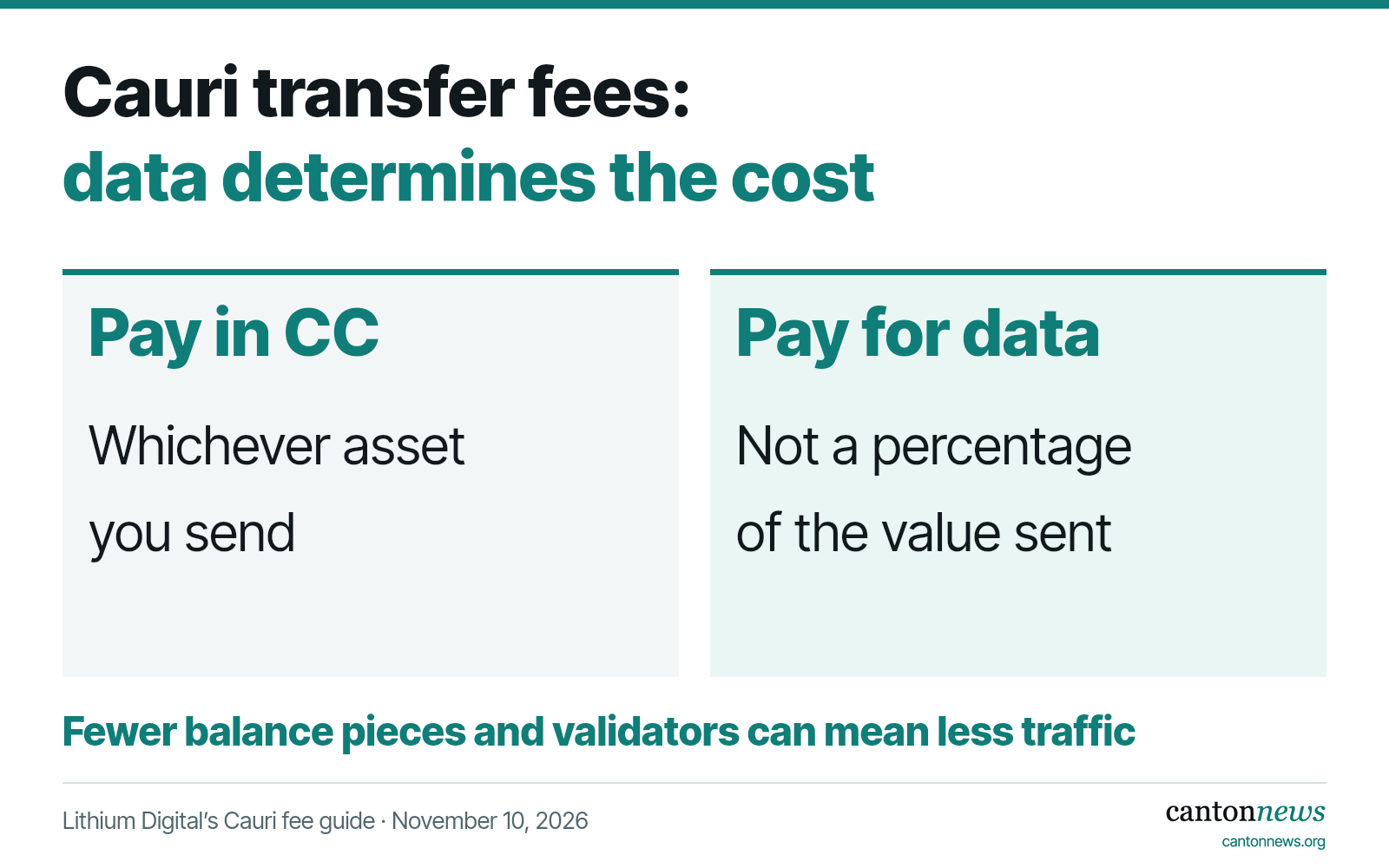
How Cauri describes its fees in the official guide.
Cauri to Cauri, or to another wallet?
Between Cauri users: both wallets are hosted on Cauri’s validator. Fewer validators need to receive the transaction, so it generally uses less traffic.
To a wallet on another validator: that validator also needs to receive and confirm the transfer. The additional data usually means a higher fee.
Both routes are ordinary Canton transactions. Lithium says the difference reflects their traffic costs, rather than a separate pricing policy for internal and external transfers.
Why Cauri made the change
Lithium says paying every user’s network costs indefinitely is not sustainable. It also points to Featured App Guidance 2.0b, which introduced updated requirements for wallets and other applications that move assets.
For someone who was used to free Cauri transfers, the practical change is straightforward: sending an asset now has a CC cost, and that cost can vary between transactions. There is no single flat transfer price in the published guide.
Official links: Cauri Wallet · Cauri on X · CantonNews project profile.
Sources: Lithium Digital’s fee guide · Cauri’s community announcement.