
Kintsu plans to introduce Kintsu Prime as its first curated credit vault on Canton. Its proposed vault model would pool stablecoin deposits and put a manager, known as a curator, in charge of allocating those funds across lending markets.
The public beta page is labelled Canton Testnet, with Markets and Vaults marked as coming soon. Prime remains a plan, not a live public vault.
What changes for lenders?
The distinction is easiest to see through Kintsu’s gold and USDC example. This is an illustration, not a confirmed Prime market. A borrower would pledge tokenized gold to borrow USDC, a dollar stablecoin. A lender supplying that market directly would be choosing to fund loans backed by that collateral.
Each market would pair one collateral asset with one loan asset and have its own rates and limits. That lets the terms reflect the asset backing the loan, rather than applying the same rules to every kind of collateral.
With a vault, the depositor would choose a strategy instead. The curator would decide which markets receive funds and how much goes into each, within the strategy’s rules. Kintsu’s lending design gives curators a role in setting those rules and managing allocations.
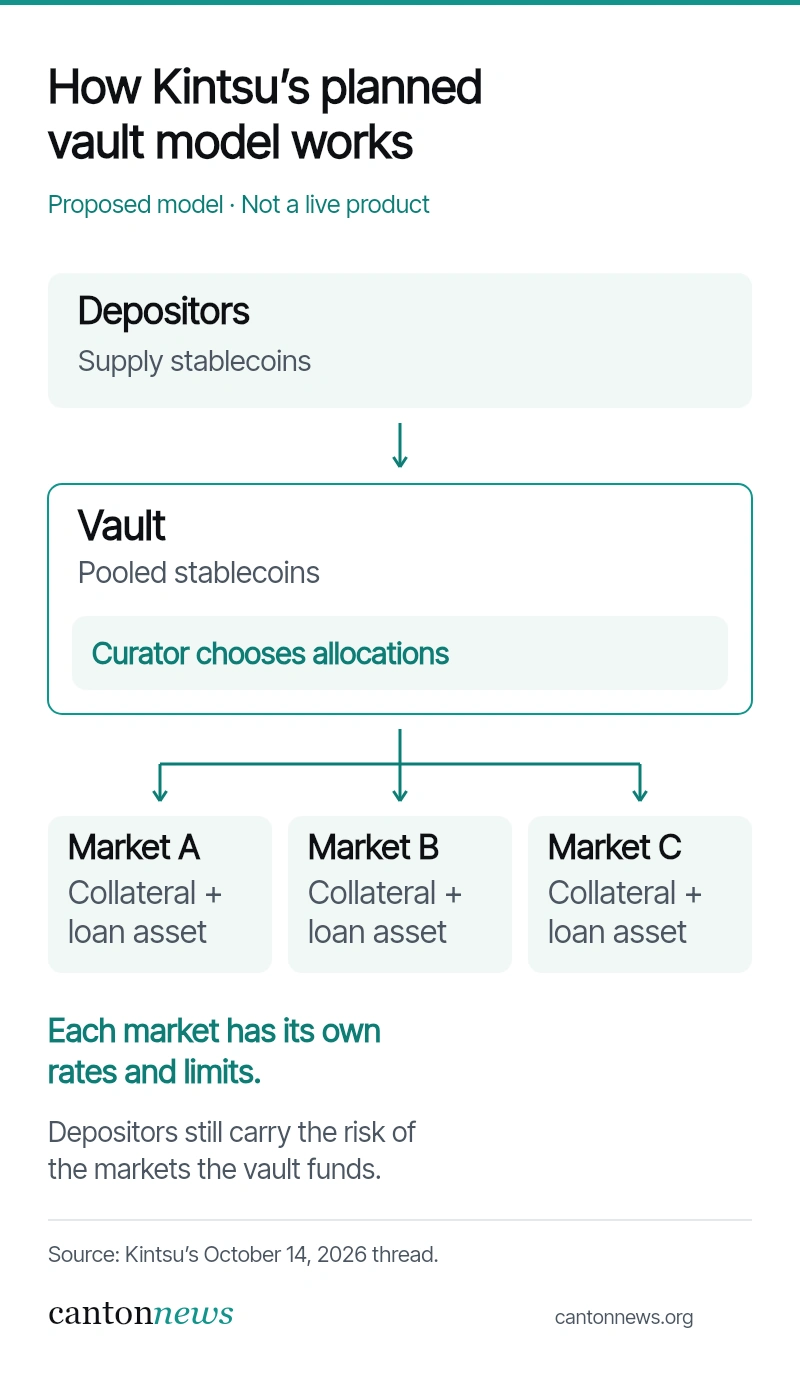
For lenders, the appeal would be less work selecting and managing individual positions. But separate markets do not make a vault’s deposits risk-free: the pool is exposed to the markets it funds. Choosing a curator would still mean understanding what they can invest in and how they manage lending risk.
Why it could matter for borrowers
A vault sits on the funding side of lending. If it attracts deposits, those funds could support borrowing against eligible assets on Canton. For an asset owner who needs stablecoins, that could provide an alternative to selling their holdings.
The borrower would keep exposure to the asset’s value, but would still have to repay the loan with interest. Their collateral could be sold if the loan no longer meets the market’s collateral requirements.
Watch: Christo on using tokenized assets as collateral ↗
Kintsu’s Ecosystem Lead explains why issuing a token is only the first step, and how borrowing could give it another use. Canton Army Spaces clip posted October 14, 2026.
How Kintsu got here
Kintsu began with liquid staking, where users receive a token representing their staked assets that can be used elsewhere. In August, it announced that Cenote’s Canton credit work would move under Kintsu, while liquid staking would remain part of its wider platform.
The project later opened its Canton private beta to borrowers, lenders and vault managers. Prime is part of that lending effort.
In another Canton Army Spaces clip, Kintsu’s Director of Growth Alexios explains how different curators could serve different assets and strategies.