
Fairmint and Blockworks have requested 2.4 million CC for shared Canton asset reporting. Their Development Fund application opened on October 12 and is awaiting approval.
The proposal targets a practical question: how do you measure a market when its ownership records are private? Canton shares transaction information only with the relevant participants. That lets institutions do business without exposing every customer's holdings, but it also means an outside analyst cannot simply read all the transactions and build a complete picture.
The proposal at a glance
- Funding: 2.4 million CC requested; approval is pending.
- Delivery: four months’ delivery and 12 months’ maintenance.
- Acceptance: Blockworks must use both asset feeds in production.
How the proposed feed would work
The Canton Asset Data Feed would cover Fairmint's private-company equity and another publisher's asset class. Blockworks must use both feeds for delivery to be accepted. The request covers four months' delivery and 12 months' maintenance, paid against accepted milestones.
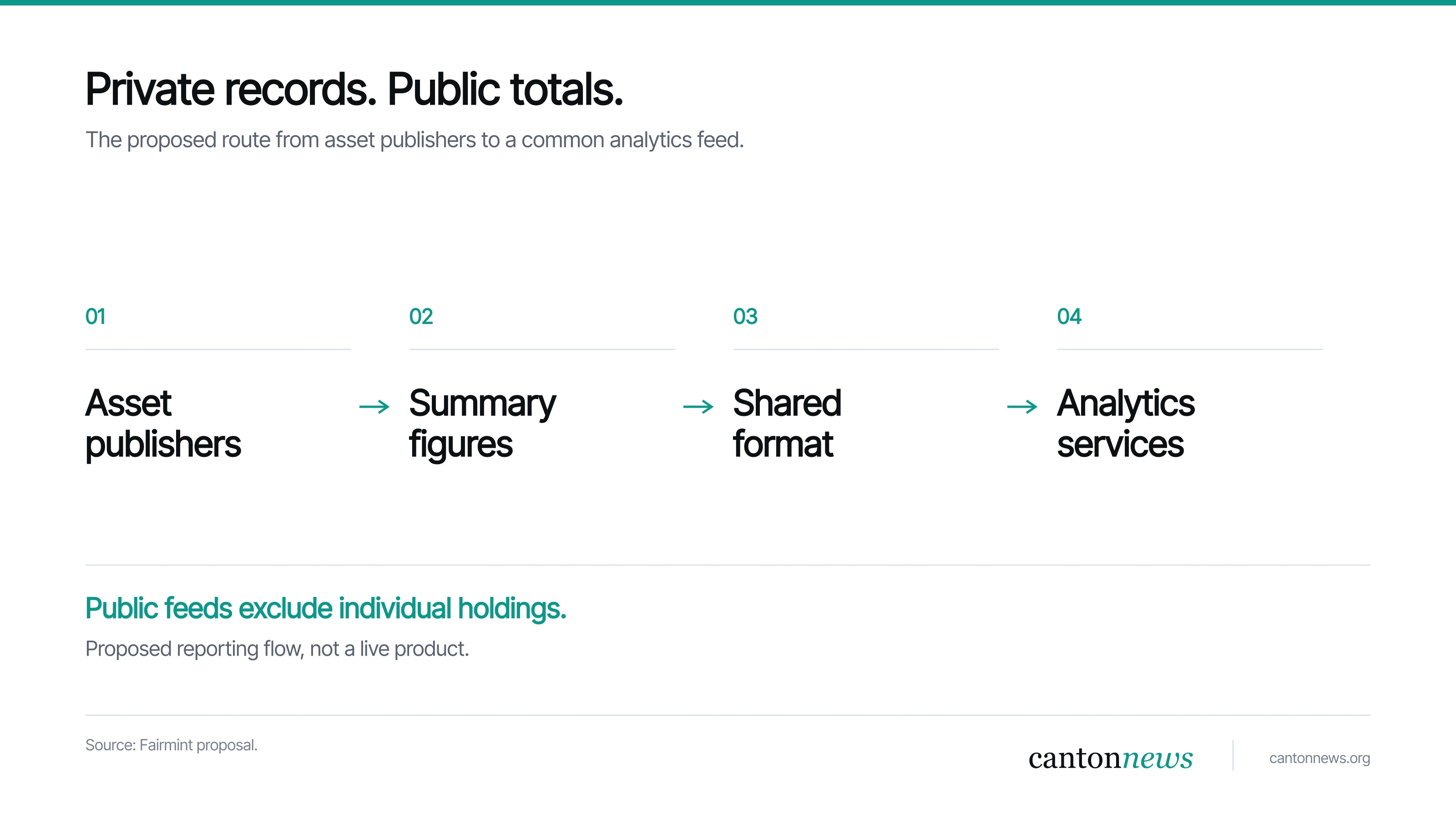
Proposed reporting flow, not a live product. Source.
Building on existing reporting
Fairmint already has a route for authorised observers to follow equity activity. Its September 2025 partnership with IntellectEU made its Observer Node application available through Catalyst Package Manager. The new proposal would add public summary feeds for data services that do not need access to individual ownership records.
There is a useful precedent in CCTools' Temple feed on DeFiLlama. CantonNews' September coverage explained which balances count towards Temple's total value locked, including the exclusion of assets moving through settlement. That detail helps a reader understand the figure, not just repeat it. Fairmint's proposal extends shared reporting to multiple publishers.
Blockworks also brings an existing distribution route. Its Unified API, introduced on September 24, supplies market data and financial metrics to customers building research tools, exchange pages and internal dashboards. That background makes the proposed production integration significant: there is an identified user for the feeds, rather than a format waiting for someone to adopt it.
This sits alongside Fairmint’s separate proposal for a common NFT format. That draft deals with how applications identify individual assets, including equity certificates. This funding request concerns the summary data used to measure markets.
What readers would gain
Consider a simple hypothetical example. One chart shows how many shares exist at the end of a month. Another shows how many shares changed hands during that month. Both are useful, but they answer different questions. The same shares can trade repeatedly without increasing the amount issued. Clear labels stop activity being mistaken for growth in the asset itself.
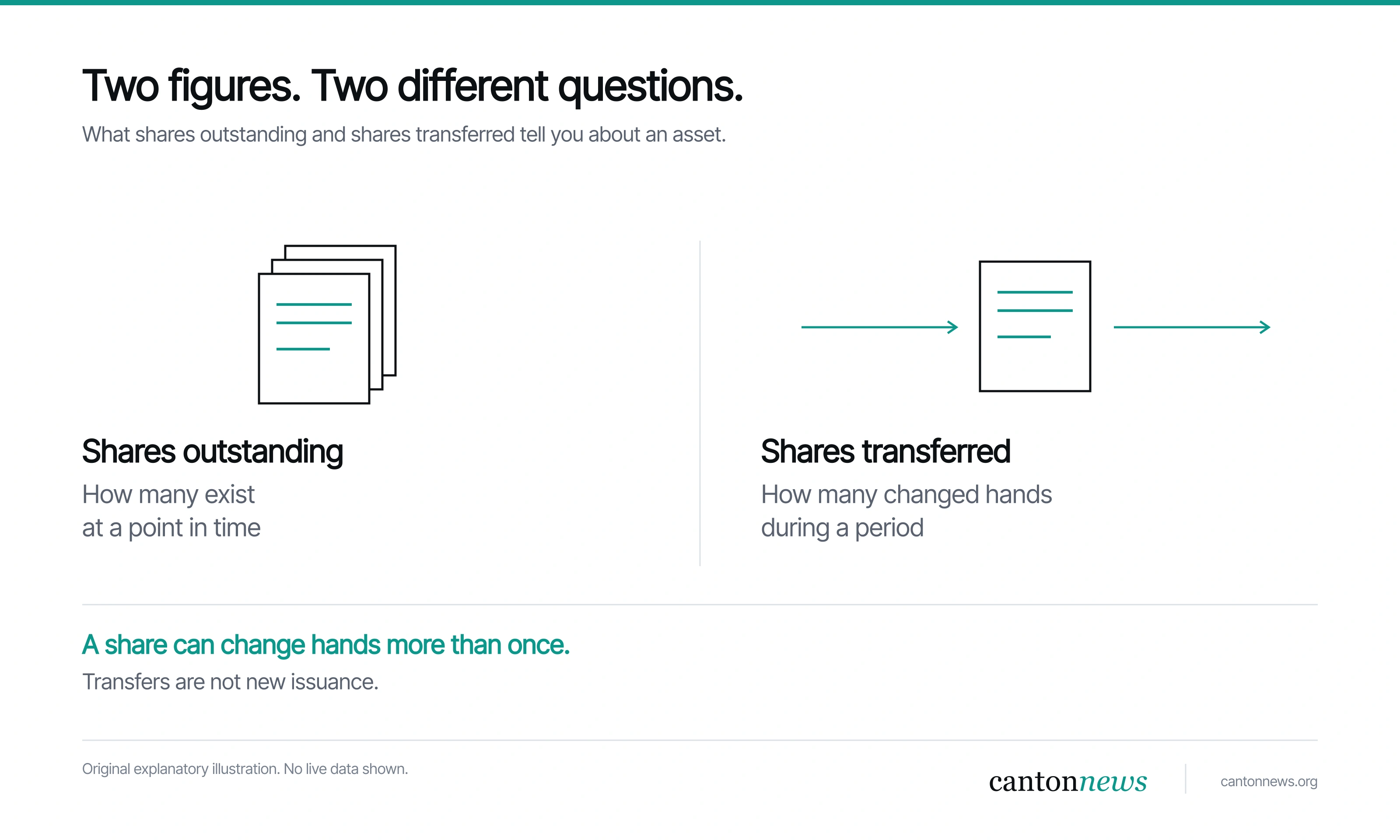
Illustrative example of the difference between asset supply and transfer activity. No measured market data is shown.
The proposed daily Canton record would preserve what a publisher declared and when. Checking whether the numbers are accurate is a separate step, requiring the underlying records or additional evidence.
We see the main benefit in making those figures easier to interpret. A reader should be able to identify the publisher, understand what is being measured and follow its history. Better reporting could make Canton’s private markets more understandable while preserving participants’ privacy.