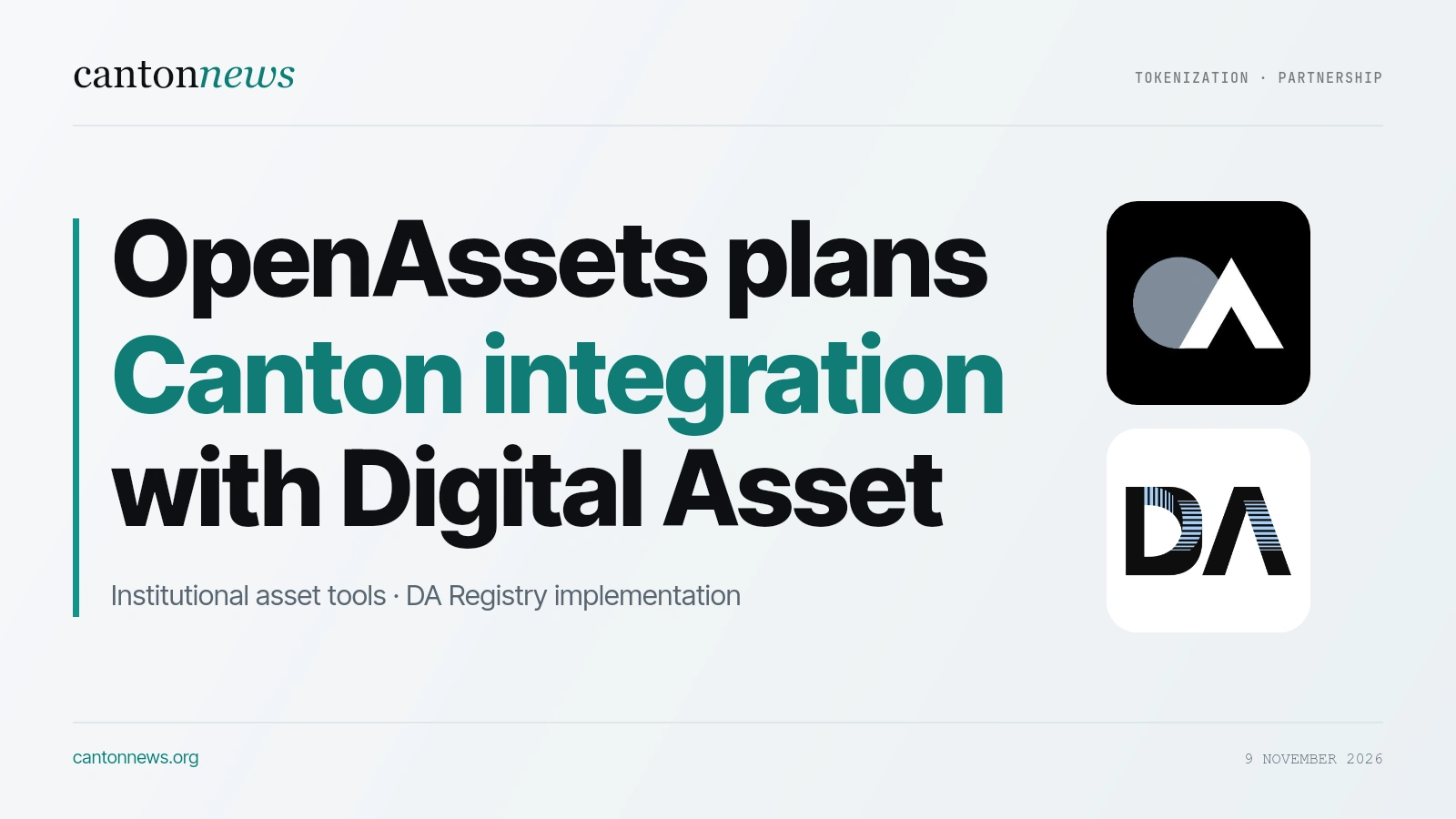

OpenAssets and Digital Asset’s planned integration. Source.
OpenAssets and Digital Asset have announced a partnership to help institutions issue and manage tokenized assets on Canton.
Under the November 5 agreement, OpenAssets will bring its market infrastructure platform to Canton and act as an implementation partner for DA Registry, Digital Asset’s tokenization product. The announcement sets out the intended integration, without naming a first live customer deployment.
The problem they are trying to solve
Creating a token is only one part of bringing a financial asset onto a blockchain. An issuer also needs to decide who can hold it, how transfers are approved, how payments settle and how records are maintained.
Those tasks become more complicated when a product must work across different wallets, custodians and trading venues. The partnership aims to provide more of that operating infrastructure together, rather than asking every institution to build each component itself.
Who provides what?
- OpenAssets: its platform brings together issuance, settlement, compliance, asset management and distribution tools.
- Digital Asset: DA Registry provides Canton-based workflows for creating, transferring and administering assets.
- The issuer: determines the asset’s terms and configures the relevant access and transfer controls.
Tokenization means representing an asset or a financial right through a digital token. What the holder actually owns depends on the product’s legal terms, not simply the fact that a token exists.
How the planned combination would work
OpenAssets would use DA Registry as part of the infrastructure it delivers to institutions. The announcement highlights controls such as approved-holder lists, blocked-holder lists and transfer approvals connected to external identity and anti-money-laundering checks.
For example, an issuer could configure a product so that transfers only go to eligible holders. This is an explanation of the intended controls, not a report of a particular customer product already deployed under the partnership.
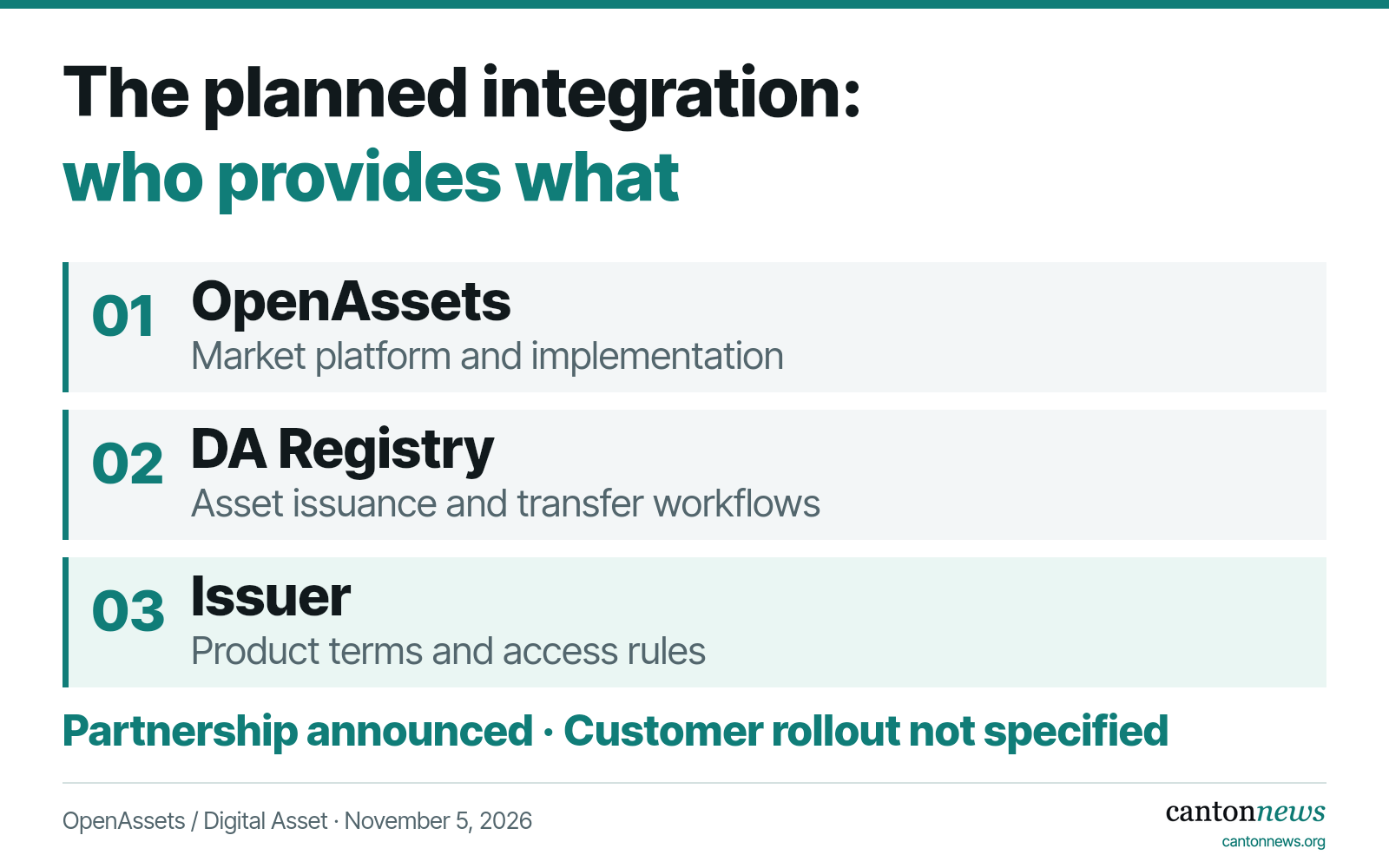
Roles in the planned integration. Partnership announcement.
Why Canton is part of the plan
DA Registry is built for Canton’s privacy and connected settlement model. Its documented capabilities include configurable access rules and connections to wallets, custodians and applications.
One useful term is atomic settlement: the agreed parts of a transaction complete together, or none complete. In a purchase, that means the transfer of an asset can be linked to its payment, rather than one party having to finish first and wait for the other.
The first tokenized CNTN share trades illustrate a separate Canton use case involving a trading venue, approved holders and an official ownership register. They are useful context for the infrastructure an asset needs, not an OpenAssets deployment.
What to watch next
The partnership is intended to make it easier for institutions to bring assets to Canton and manage them once issued. The next concrete evidence would be a named customer implementation, a product going live or documented usage of the combined service.
The companies have not supplied a first-customer launch date. OpenAssets’ existing business relationships also do not mean that each of those organisations has adopted Canton through this agreement.
Official links: Partnership announcement · DA Registry capabilities · OpenAssets on X · Digital Asset on X.