
Greywick and Luxxfolio’s proposed cLTC arrangement, disclosed October 29. Graphic: CantonNews.
Luxxfolio mines Litecoin and holds some of it in its treasury. Under a letter of intent disclosed October 29, it is exploring putting part of that Litecoin to work on Canton without first selling it. Greywick named the miner as the first ecosystem partner for cLTC, its planned Litecoin-backed token.
How mined Litecoin could become collateral
Greywick’s design calls for one Litecoin (LTC) to back each cLTC issued on Canton. Under the proposed arrangement, Luxxfolio would lock some of its mined LTC in a reserve and receive the corresponding number of cLTC. Luxxfolio could then supply some of those tokens for trading. That initial supply is what the companies mean by seed liquidity.
One use the partners want to explore is borrowing. If a lender accepted cLTC as collateral, the miner could pledge it as security for a loan. The lender would need to know how the reserve is held and how cLTC can be exchanged back for Litecoin. Those terms affect what the lender can recover if a borrower fails to repay.
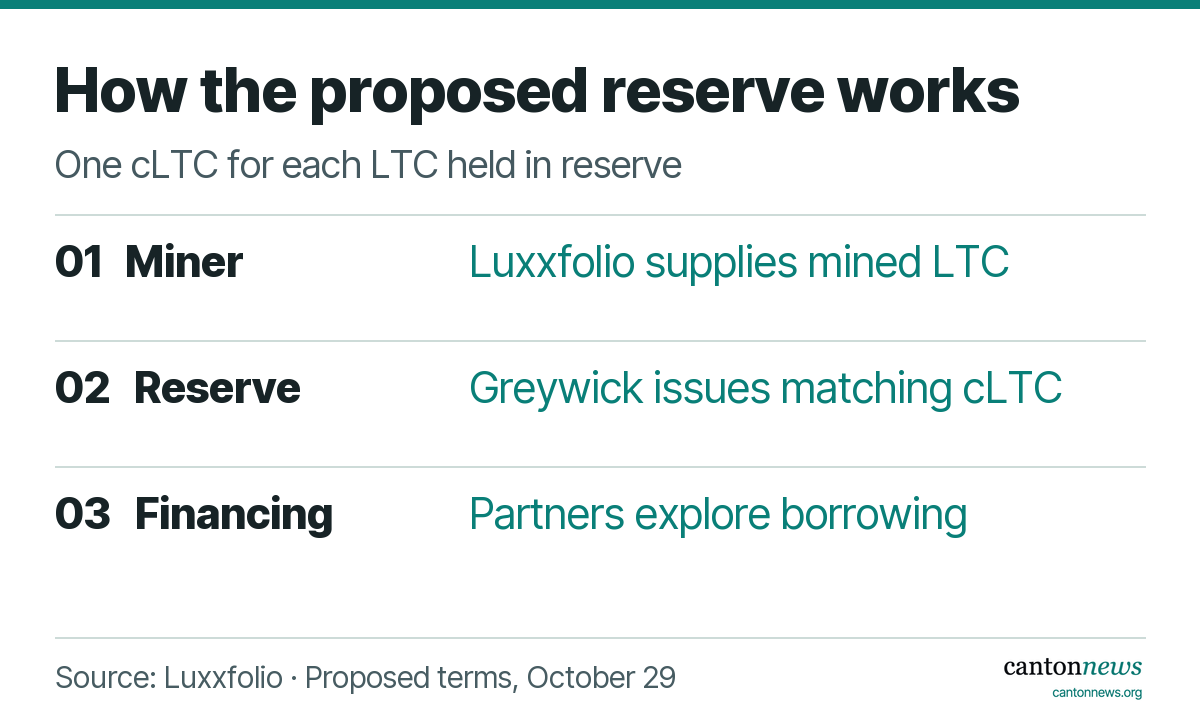
The proposed route from mined LTC to cLTC requires agreed custody and redemption terms. Source: Luxxfolio’s announcement.
What the companies have signed
The October 27 letter is binding only on confidentiality. It names no treasury allocation and requires a further signed agreement for any commercial commitment. Each company bears its own costs.
Greywick had previously outlined an early-November launch target. The new release describes a late-2026 target and says the reserve addresses, the format for independent checks on the backing, and the launch sequence still need to be published. Before Luxxfolio can put any mined LTC into the reserve, the parties still need to agree who holds it and how the miner can redeem its tokens.
Source: Luxxfolio’s announcement.